

Design
The Benefits of a Design Consultant Model
10 February 2026 · 5 min read
The Benefits of a Design Consultant Model
Australia has over 13,755 architectural businesses, and 98% of them employ fewer than 20 people. That is not a sign of an industry that cannot scale. It is a sign of an industry where small, focused practices consistently outperform bloated ones.
At Yaxley Studio, we operate what is called a design consultant model. We are a small architecture practice by choice, and we collaborate with specialist consultants on every project. This is not a workaround for being under-resourced. It is how we deliver better buildings.
Here is why this model works, and why it matters if you are a property owner about to spend serious money on design and construction.
The Old Model Is Showing Its Age
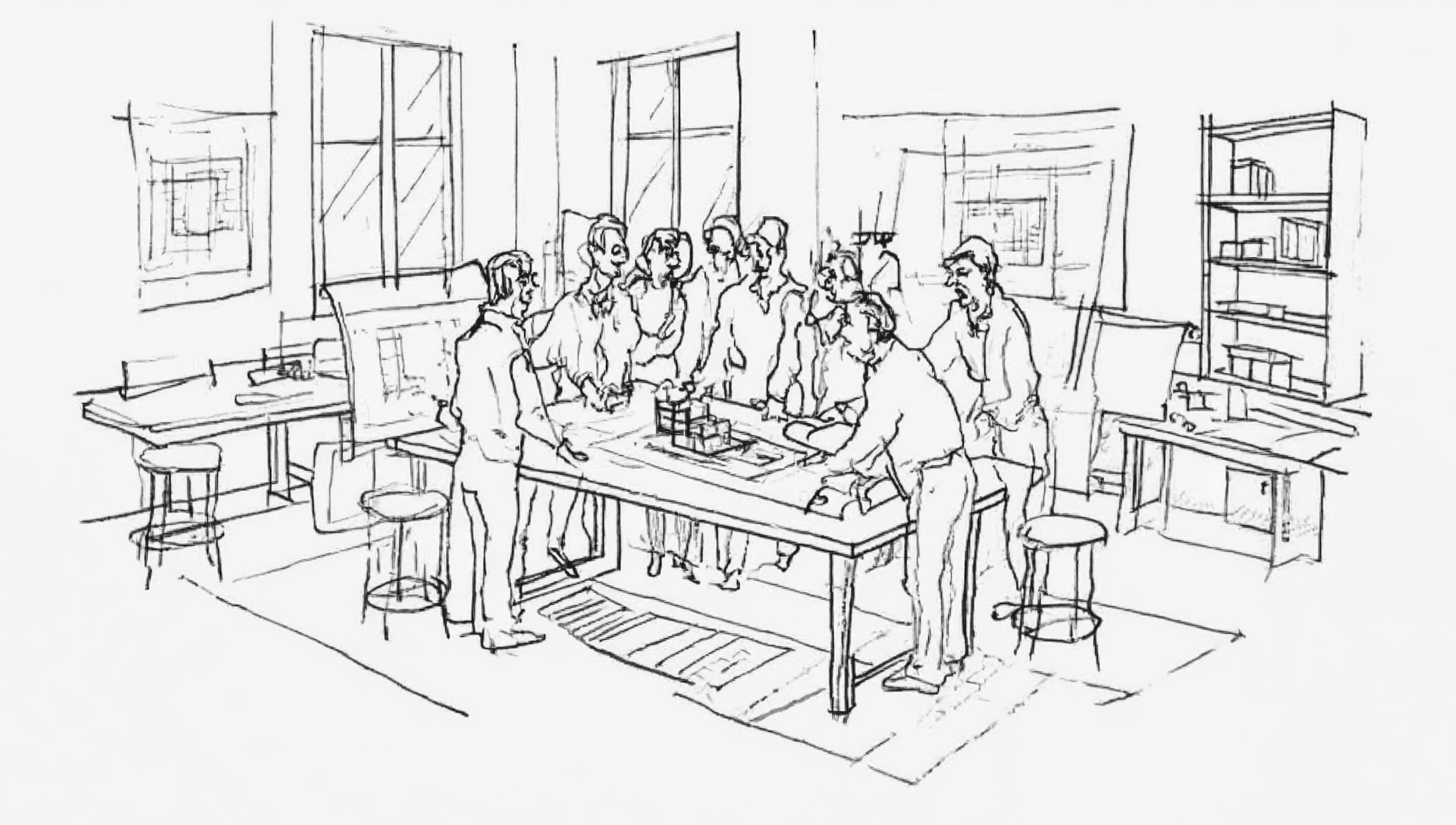
The traditional architecture practice tries to do everything in-house. Concept design, interiors, landscape, sustainability and documentation are all handled by salaried generalists under one roof. The bigger the firm, the more services it offers, and the more overhead it carries.
In a $7.2 billion market where no single firm holds more than 2% market share (IBISWorld, 2025-26), there is no dominant player. The industry is fragmented because architecture is inherently local and project-specific. A 200-person firm in the CBD does not have any structural advantage over a five-person studio in Surry Hills, not when the work demands deep attention to site, client, and context.
The problem with the generalist model is straightforward: when one firm tries to cover every discipline, it ends up being average at most of them. Your interiors are handled by someone whose real passion is facades. Your landscape plan is an afterthought drawn up by whoever had capacity that week.
How the Design Consultant Model Works
Instead of staffing up with permanent generalists, a design consultant practice assembles a bespoke team for each project. The architect leads the design vision and coordinates a group of independent specialists, each one an expert in their specific discipline.
Think of it like a film production. The director does not also operate the camera, edit the footage, and compose the score. They bring together the best people for each role and unify the result. The same logic applies to buildings.
This is not a fringe idea. The ACA's State of the Profession report notes that "specialisation of both knowledge and technical skills may insulate a practice from fee shrinkage." In plain terms: practices that go deep on expertise hold their value better than those that spread thin.
ArchiTeam Cooperative, the membership association for small and medium practices across Australia, has built an entire support network around this reality. The future of architecture is not mega-firms. It is networked expertise.
A Real Example: Sanders Place
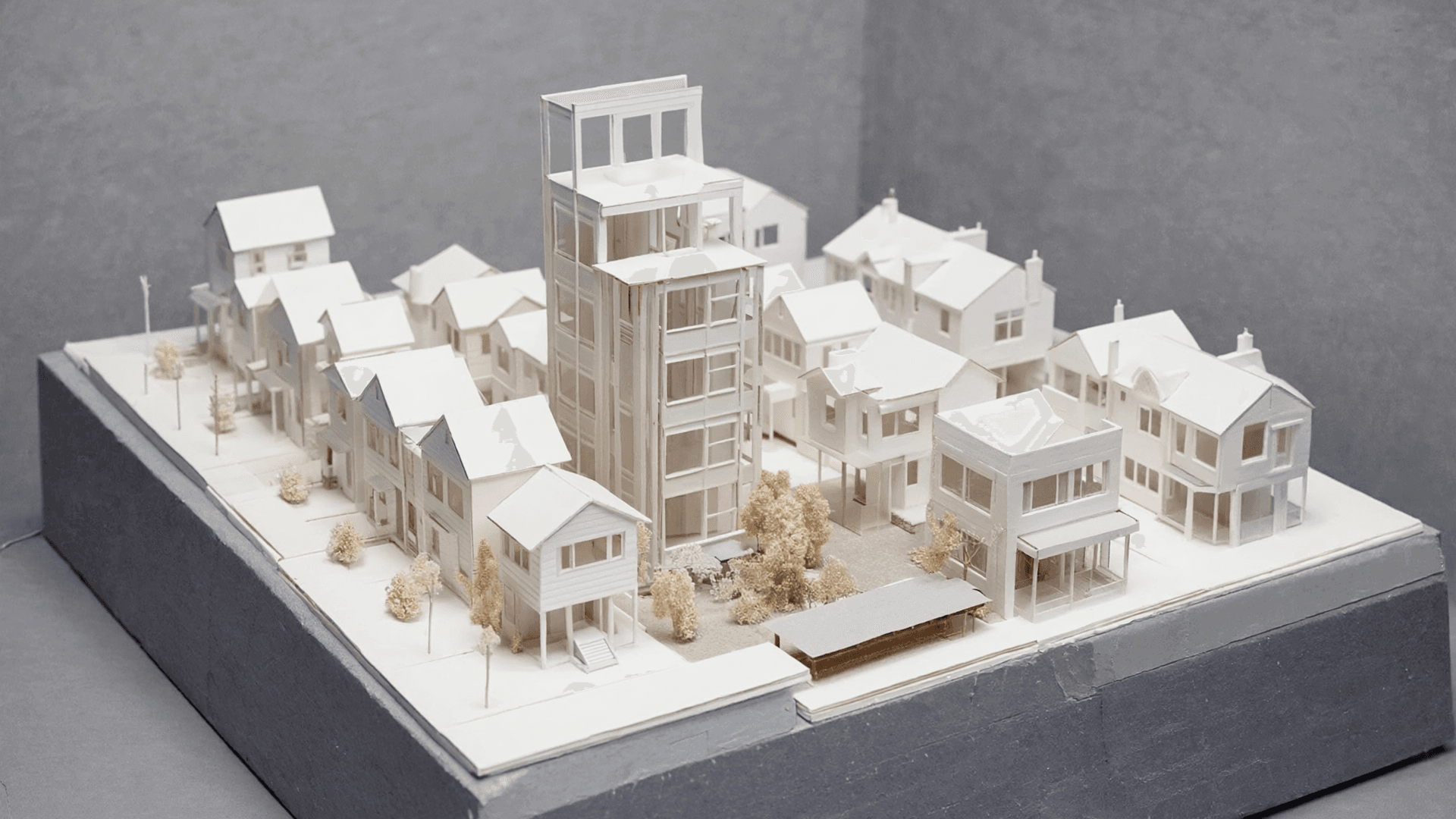
The Sanders Place project brought together an architect, a landscape architect, and an ESD consultant as equal collaborators from day one, not as sub-consultants brought in after the key decisions were already made. The result was a net-zero commercial building where sustainability was not bolted on at the end but woven into every design decision from site planning to material selection.
That outcome is almost impossible in a traditional firm where the sustainability consultant is a junior employee who gets consulted after the floor plan is locked in.
What This Means for Your Project
You Get Genuine Specialists
When we bring a landscape architect onto your residential project, that person has spent their career thinking about plants, soil, drainage, and outdoor living. They are not an architecture graduate who took one elective in landscape design. The same goes for our ESD consultants, heritage advisors, and interior designers.
Ellul Architecture is an emerging practice that has been recognised specifically for its expertise in small residential work. Even with that focused skill set, they coordinate with specialist consultants to deliver complete projects. Specialisation is not a limitation; it is an advantage that compounds when paired with other specialists.
Your Budget Works Harder
Architect fees typically run 10-15% of construction cost. Building designers charge 5-8%. The design consultant model lets a practice operate with lower fixed overheads, without a massive office lease or a bench of underutilised staff, which means your fees buy more design time and less admin.
This matters because the real cost of a bad design is not the architect's fee. It is the $50,000 renovation you need three years later because someone did not think through the kitchen layout, or the $20,000 in energy bills over a decade because no one modelled the thermal performance properly.
The Collaborative Dynamic Produces Better Work
Independent consultants have no internal politics. There is no hierarchy where the principal overrides the junior designer's better idea because that is how things have always been done. When an ESD consultant and a landscape architect sit at the same table as equals, you get genuine design integration, not a chain of compromises handed down from the top floor.
43% of Australian practices reported billing growth in 2024 according to the Architectural Billings Index, with mid-size practices of 11-25 people showing the strongest growth at 63%. That mid-size sweet spot is exactly where networked small practices operate, lean enough to be efficient, yet connected enough to deliver at scale.
When Does This Model Work Best?
The design consultant model is not the right fit for every situation. If you are building a 40-storey tower with a two-year documentation phase, you probably need a large firm with deep in-house resources.
But for residential projects, small commercial buildings, renovations, and mixed-use developments, the kind of work that makes up the vast majority of the Australian market, a specialist-led approach delivers better outcomes at every level. Better design, better coordination with consultants who actually want to be there, and better value for your investment.
What to Look For in a Practice
If you are considering this model, here is what matters:
- A clear design leader. Someone needs to own the vision and hold the project together. The architect's role is to set the direction and make sure every consultant's contribution serves the whole.
- Established consultant relationships. A practice that has worked with its specialists across multiple projects will coordinate more smoothly than one assembling a team from scratch.
- Transparency about who does what. You should know exactly which consultants are on your project and what they are responsible for. No black boxes.
- A track record of integrated outcomes. Ask to see projects where the landscape, interiors, and sustainability were clearly designed together, not layered on separately.
Not sure what to look for when evaluating a practice? Our guide on choosing the right architect covers the green flags, red flags, and the questions you should actually ask before signing a fee agreement.
The Bottom Line
The Australian architecture industry is built on small practices for a reason. The work is better when it is personal, focused, and driven by genuine expertise rather than organisational inertia.
At Yaxley Studio, this is not just a business model. It is how we think buildings should be designed. We lead the architecture, we bring in the best specialists for each project, and we make sure every consultant's work serves a unified design vision.
One of the major advantages of working with a specialist-led team is how we handle planning regulations in Sydney. Our partner consultants bring council-specific experience that generalist firms simply cannot match.
If you are planning a project in Sydney and want a team that is built around your specific brief rather than a firm's existing staff list, get in touch.
Buyer-facing version of the same idea for Sydney councils: Architect who partners with local consultants. Related: Project architect vs hiring a designer directly.
Start Your Project
Have a project in mind? Tell us about it and we'll get back to you within 24 hours.
Let's Talk