

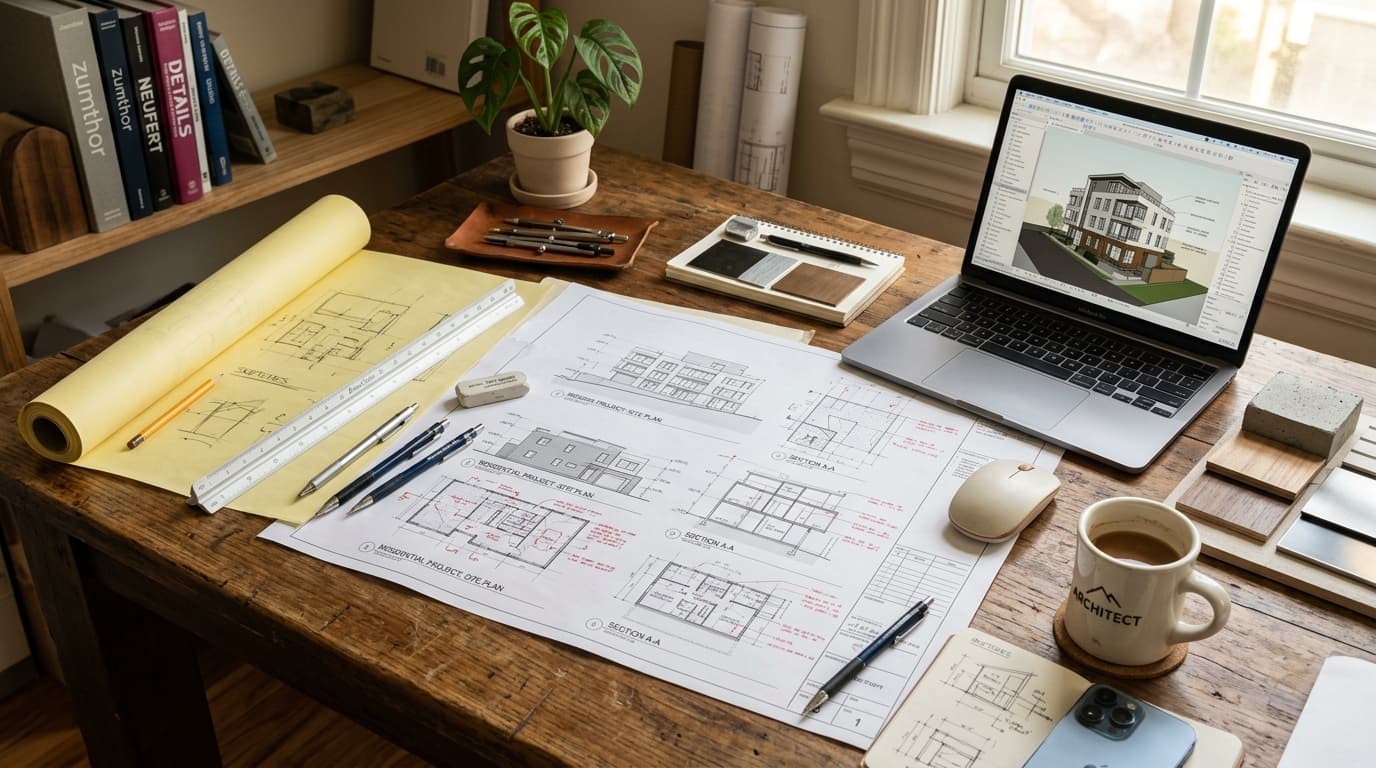
Architecture
Architect vs Building Designer in NSW: Which Do You Actually Need?
20 March 2026 · 6 min read
Architect vs Building Designer in NSW
This is one of those questions where the internet gives you a clean table of pros and cons and then leaves you no closer to a decision. So let me cut through it.
I am a registered architect. I run a practice that partners with specialist design consultants. I have worked alongside building designers, draftspeople, and other architects across hundreds of projects. Here is what I actually think.
The Legal Difference Matters More Than You Think
In NSW, the title "architect" is protected by law under the Architects Act 1921. To use it, you need:
- A five-year university degree (three-year bachelor plus two-year master's)
- A minimum of 3,300 hours of logged, supervised professional experience
- To pass the Architectural Practice Examination administered by the Architects Accreditation Council of Australia
- Registration with the NSW Architects Registration Board
- Mandatory professional indemnity insurance
- Ongoing continuing professional development
Building designers have a different path. Typically a one to two year TAFE or VET diploma. In NSW, some require a licence from NSW Fair Trading for certain residential work, but the title itself is not protected. Anyone can call themselves a building designer (Michael Bell Architects, 2025).
This is not academic. It has direct consequences for you as a consumer.
If your registered architect makes an error that costs you money, you have recourse through the Architects Registration Board and their mandatory PI insurance. If your building designer makes the same error and carries no insurance, which is not uncommon, you are on your own.
The Australian Institute of Architects has repeatedly raised concerns about the lack of equivalent consumer protection for building designer services, particularly on complex residential projects (AIA NSW Submission, 2023).
The Fee Difference Is Real
Let us be honest about costs because this is usually the deciding factor.
| Registered Architect | Building Designer | |
|---|---|---|
| Hourly rate | $150 to $350 | $50 to $200 |
| Percentage of build | 8% to 15% | 3% to 8% |
| Fixed fee (typical project) | $15,000 to $80,000+ | $5,000 to $40,000 |
| PI insurance | Mandatory | Optional |
| Registration body | NSW Architects Registration Board | NSW Fair Trading (limited) |
Sources: Archquote 2025, Sunday House Projects 2025, Banksia Building Design 2025.
On a $600,000 residential build, that fee difference could be $20,000 to $40,000. That is real money. And for straightforward projects on uncomplicated sites, a competent building designer will deliver a perfectly good result for less.
When a Building Designer Is the Right Choice
A building designer makes sense when:
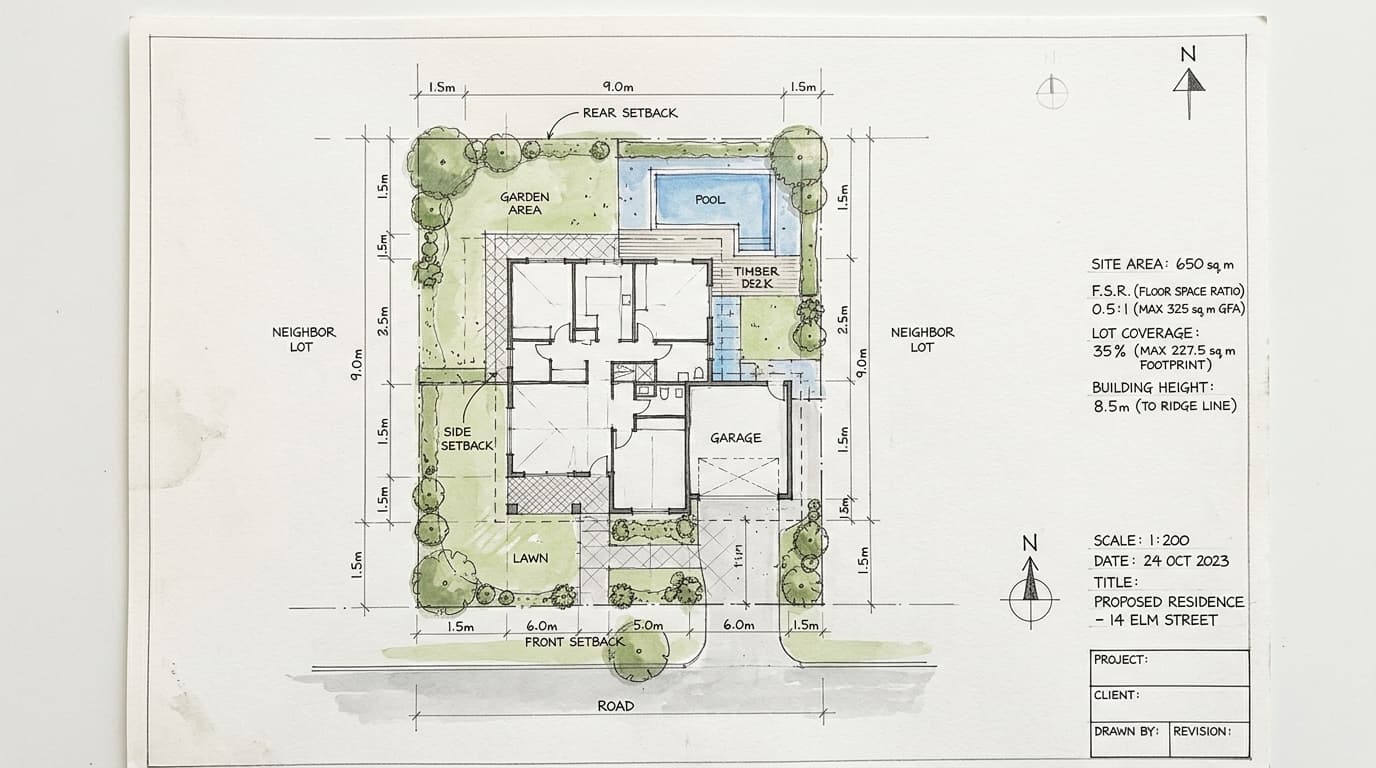
- Your project is straightforward. A standard single-storey extension, a granny flat under CDC, or a simple renovation where the planning controls are clear and the site has no significant constraints.
- You have a tight budget. If the fee difference means the difference between proceeding with the project or not, a good building designer is far better than no professional at all.
- The approval pathway is a CDC. Complying Development is assessed against a fixed code. It does not require the kind of council negotiation and design argument that an architect's training is specifically geared toward.
- You already know what you want. If your brief is well defined and you need someone to document it competently and get it through council, a building designer can handle that efficiently.
When You Need an Architect
An architect becomes worth the additional investment when:
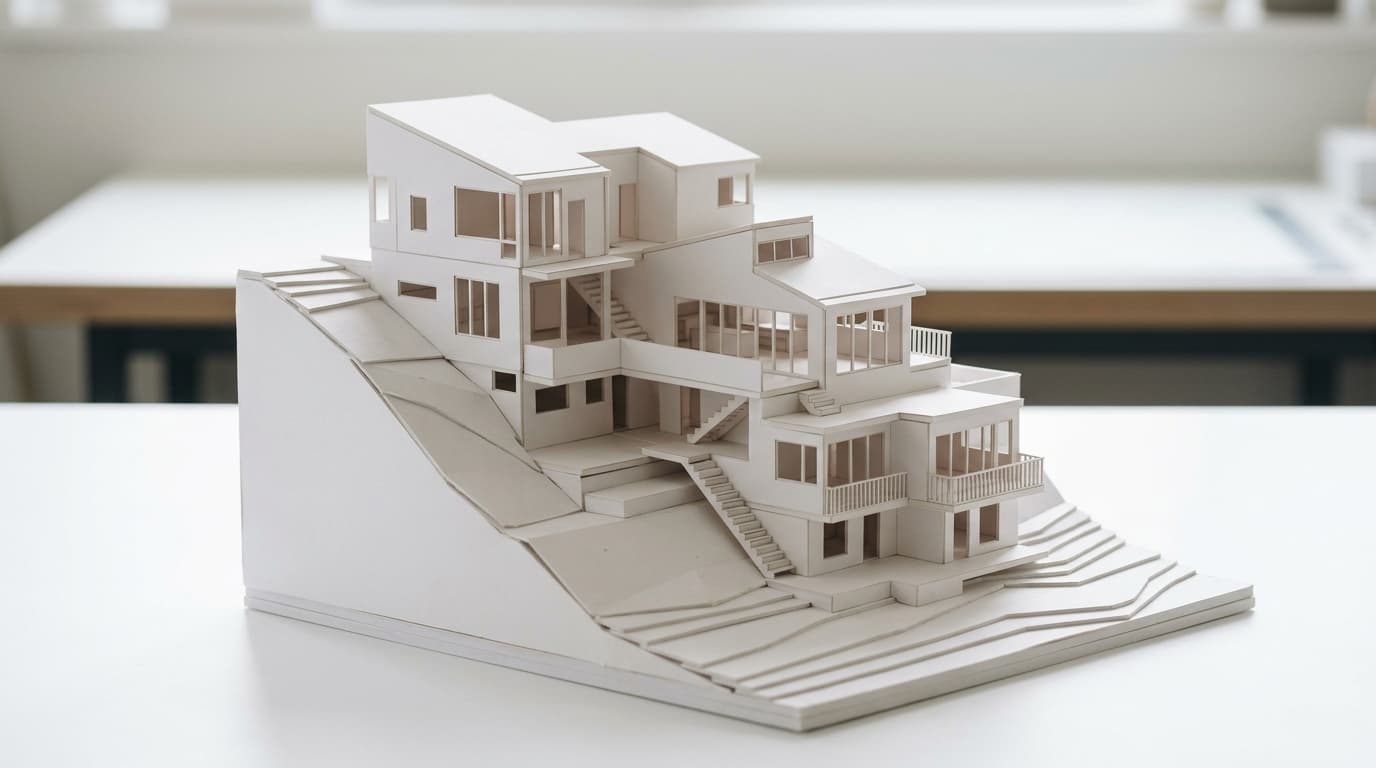
- Your site is complex. Steep topography, bushfire zones, flood-prone land, heritage conservation areas, or sites with multiple planning overlays require the kind of design problem-solving that a five-year architectural education is built around.
- Council negotiation will make or break the project. If your design pushes against DCP controls and you need to argue that an alternative solution achieves the objectives, you want someone trained in that specific discipline. Section 3.42 of the Environmental Planning and Assessment Act allows flexibility, but only if the argument is well made.
- You want contract administration. An architect who administers the building contract acts as your independent advisor during construction. They review the builder's progress claims, assess variations, and ensure what gets built matches what was designed. This oversight alone can save multiples of the fee difference.
- The project is multi-storey or structurally complex. Plans submitted by registered architects are accepted by all councils for all project types. Building designers may face restrictions on complex or larger-scale work (Michael Bell Architects, 2025).
- You want end-to-end accountability. From the first briefing conversation to the final occupation certificate, a registered architect provides a single line of professional accountability backed by mandatory insurance.
The Third Option Most People Miss
The traditional comparison is binary. Architect or building designer. But there is a third model that combines the advantages of both.
At Yaxley Studio, we operate a design consultant model. We are a registered architecture practice, which means you get the full legal protection, PI insurance, and registration that comes with working with a registered architect. But we partner with specialist design consultants rather than maintaining a large in-house team.
The result is architectural-level accountability and consumer protection, combined with the efficiency and fee competitiveness that comes from lean overhead.
We are not a 200-person firm charging CBD rates to cover a payroll of underutilised graduates. We are a principal architect leading a bespoke team of specialists assembled for your specific project.
How to Check Credentials
Before you engage anyone:
-
If they call themselves an architect: Check the NSW Architects Registration Board public register at architects.nsw.gov.au. If they are not on it, they are not an architect regardless of what their business card says.
-
If they are a building designer: Ask for their NSW Fair Trading licence number and a certificate of currency for their professional indemnity insurance. If they cannot produce both, understand what that means for your consumer protection.
-
For either: Ask for references from recent clients. Not a testimonial on a website. An actual phone number for someone who has been through the full process and can tell you what it was really like.
We wrote a detailed guide on choosing the right architect that covers the full evaluation process including the questions most homeowners forget to ask.
The Bottom Line
The right professional for your project depends on three things: the complexity of your site, the approval pathway your project requires, and how much oversight you want during construction.
For simple projects on simple sites, a competent building designer delivers good value. For anything involving planning complexity, council negotiation, or construction oversight, a registered architect is worth the additional investment because the cost of getting it wrong is always higher than the fee difference.
If you are not sure which category your project falls into, that uncertainty itself is a strong signal that you should be talking to an architect. Get in touch and we will give you a straight answer.
FAQ
Is a building designer the same as an architect? No. In NSW, "architect" is a legally protected title requiring a five-year degree, supervised practice, a registration exam, and mandatory PI insurance. "Building designer" is not a protected title and has no equivalent mandatory requirements.
Can a building designer lodge a DA? Yes. Building designers routinely prepare and submit Development Applications and CDC packages. However, for complex applications requiring design argument and council negotiation, an architect's training may produce better outcomes.
Do I need an architect for a granny flat? Not necessarily. Many granny flats qualify for CDC assessment, which a building designer can handle competently. If your site has constraints like heritage overlays, bushfire zoning, or flood affectation, an architect may be necessary.
How do I verify an architect's registration in NSW? Visit the NSW Architects Registration Board register at architects.nsw.gov.au. You can search by name or registration number. If someone is not on the register, they are not legally entitled to use the title "architect" in NSW.
Already comparing “go direct to a designer”? Read Project architect vs hiring a designer directly in Sydney.
Start Your Project
Have a project in mind? Tell us about it and we'll get back to you within 24 hours.
Let's Talk