

Residential
42 Sylvania Street — Mt Victoria Residence
Category
Residential
Location
Mount Victoria, Blue Mountains NSW
Size
DA Approved
Year
2017–2019
The Project
Our clients Daniel and Sarah owned a block of land on a ridge in Mount Victoria, one of the upper Blue Mountains' most elevated villages. The site sat at the edge of a protected escarpment with views north across the Grose Valley, surrounded by national park on three sides. They were living overseas and wanted to build a property they could use during holidays and lease as a retreat when they were away, something modern, sustainable, and deeply connected to the landscape.
The brief was unusual: two separate but connected buildings, each capable of being leased independently or occupied together as one larger home. Open-plan living with generous natural light. Steel and timber construction. Useable outdoor spaces that flowed through the property. And above all, a design that responded honestly to the extraordinary natural setting rather than imposing itself upon it.
The Site
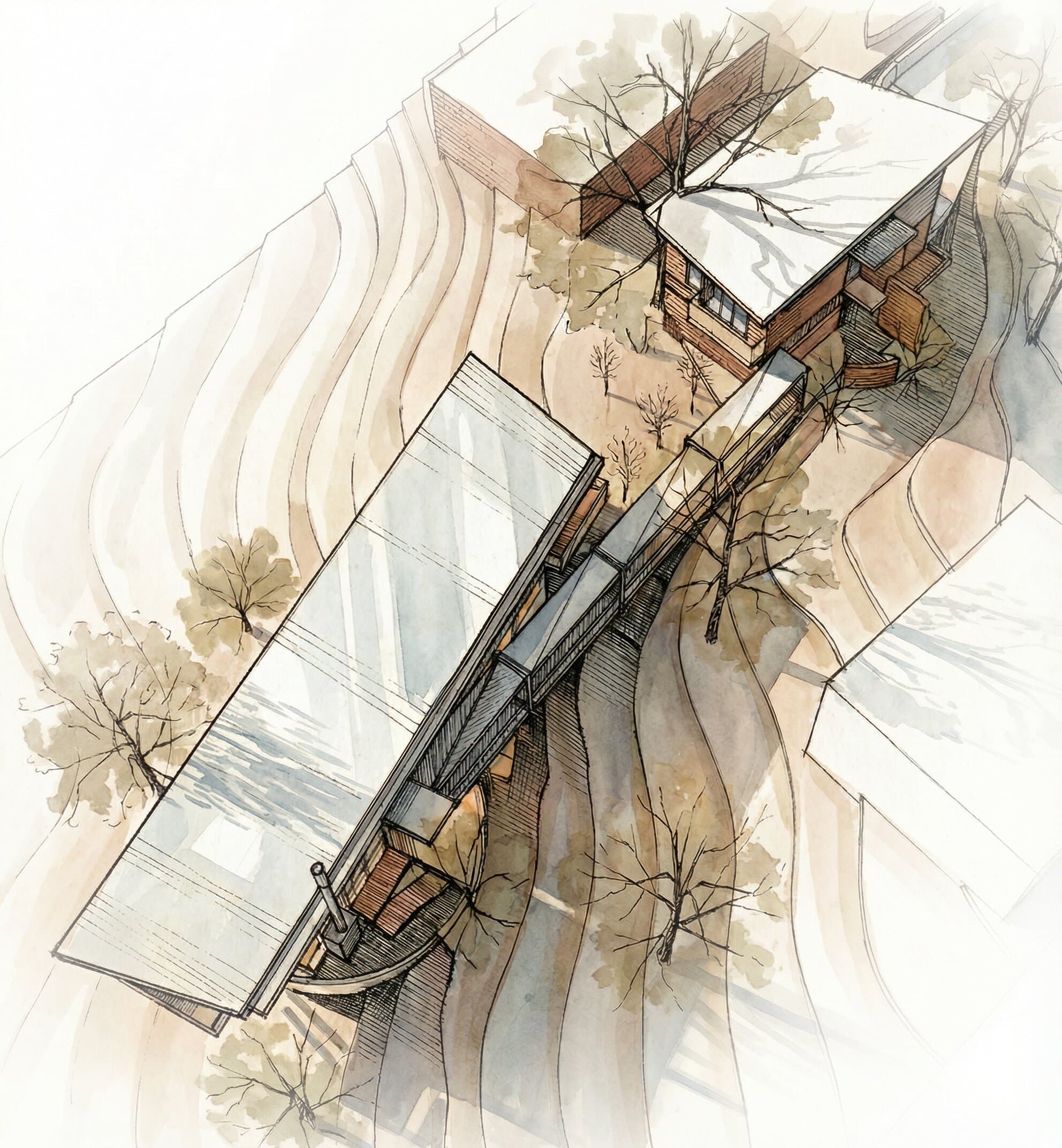
The 1,089-square-metre site is long, narrow, and steeply sloping, dropping away into dense bushland. Despite sitting within a residential subdivision, it feels remarkably isolated, enclosed by mature eucalypt canopy and undisturbed natural ground. The site carries a bushfire flame zone rating, the highest attack level under Australian standards, and sits within overlapping environmental conservation, escarpment protection, and slope constraint zones. The maximum building height is 5.5 metres.
It is a site that rewards restraint. Its ruggedness and slope would be too expensive to tame into a conventional house-and-garden arrangement, and doing so would destroy the very qualities that made the land worth building on.
The Challenge
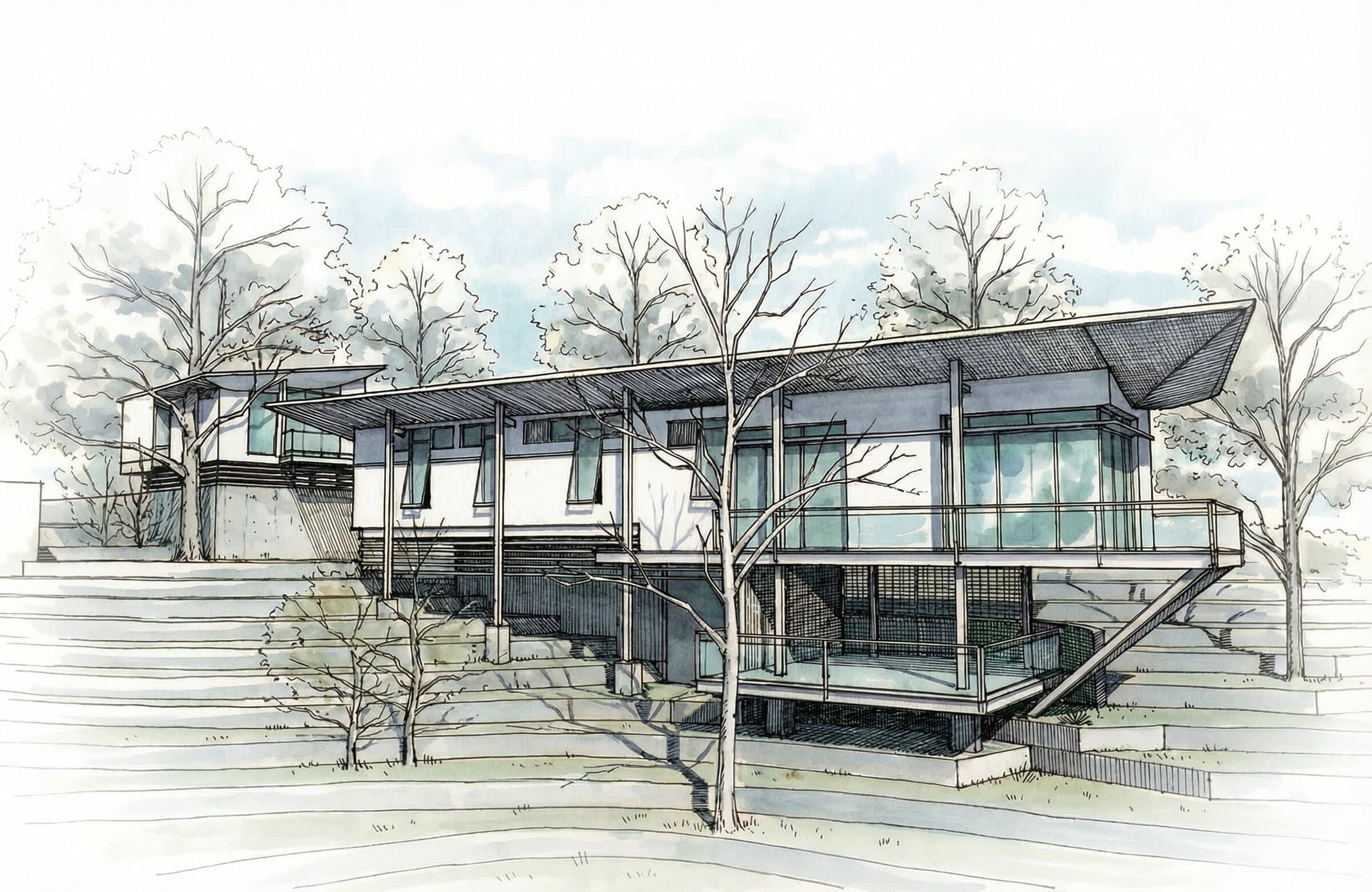
Daniel and Sarah originally described their vision as a form of eco-tourism: two dwellings that could be independently leased to visitors wanting a Blue Mountains bush experience. When we took this to council for a pre-DA discussion, we learned that eco-tourism is classified as a commercial development under the local planning controls. That classification would have triggered commercial-grade bushfire access roads, mandatory on-site management, and state agency review, requirements that were prohibitively expensive for a small residential site and would have fundamentally undermined the bush setting the project depended on.
Rather than fight the classification, we listened to council and reconsidered the strategy entirely. A primary residence with a smaller secondary dwelling brought the project back within residential planning controls while preserving everything the clients actually needed: two distinct buildings, flexible occupation, and the ability to lease one or both.
The secondary dwelling was limited to 60 square metres, smaller than the original brief had envisioned. But the constraint sharpened the design. It pushed us to think more carefully about what each building needed to be and how the two could work as a deliberate architectural composition rather than simply two houses on one lot.
Our Approach
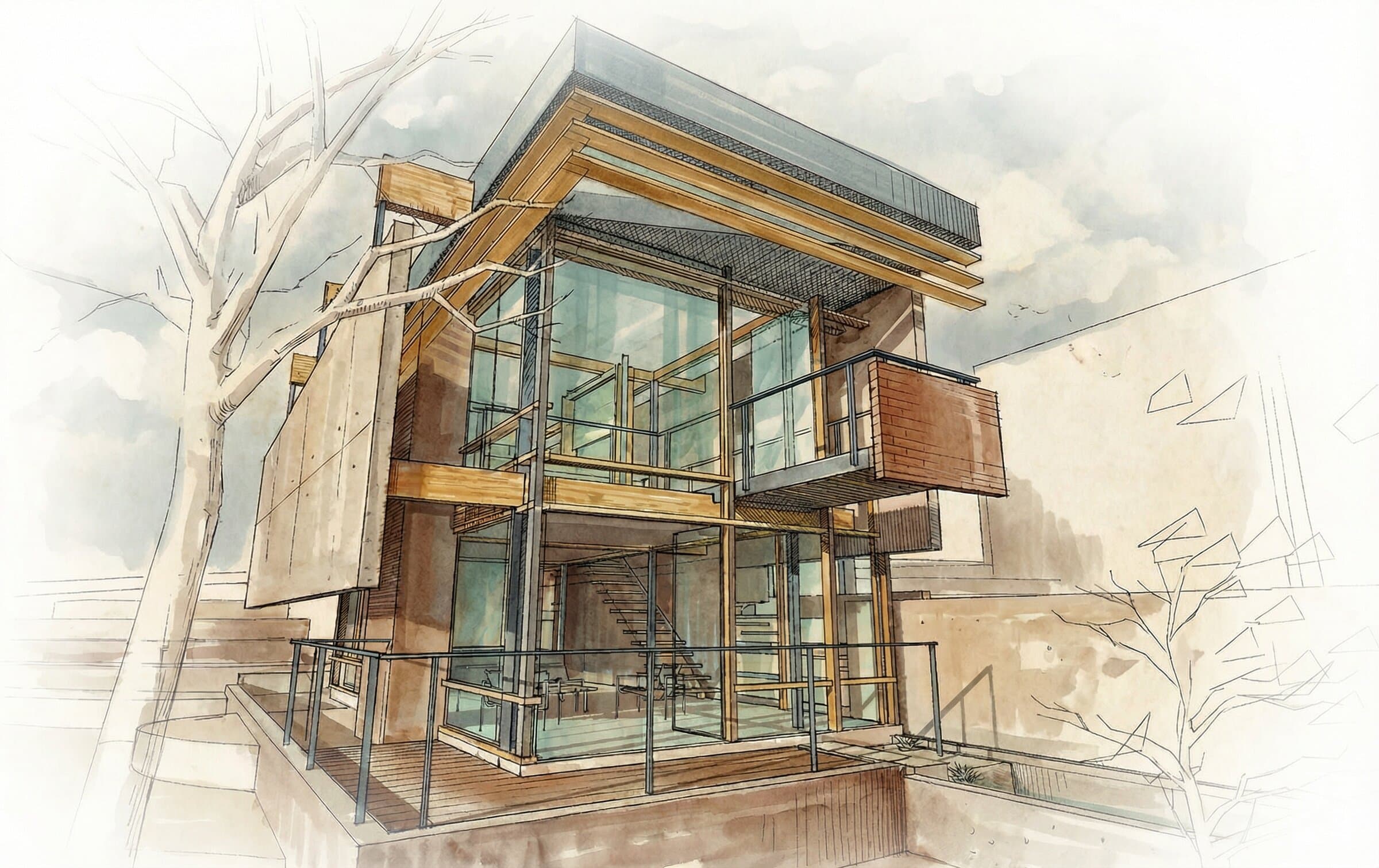
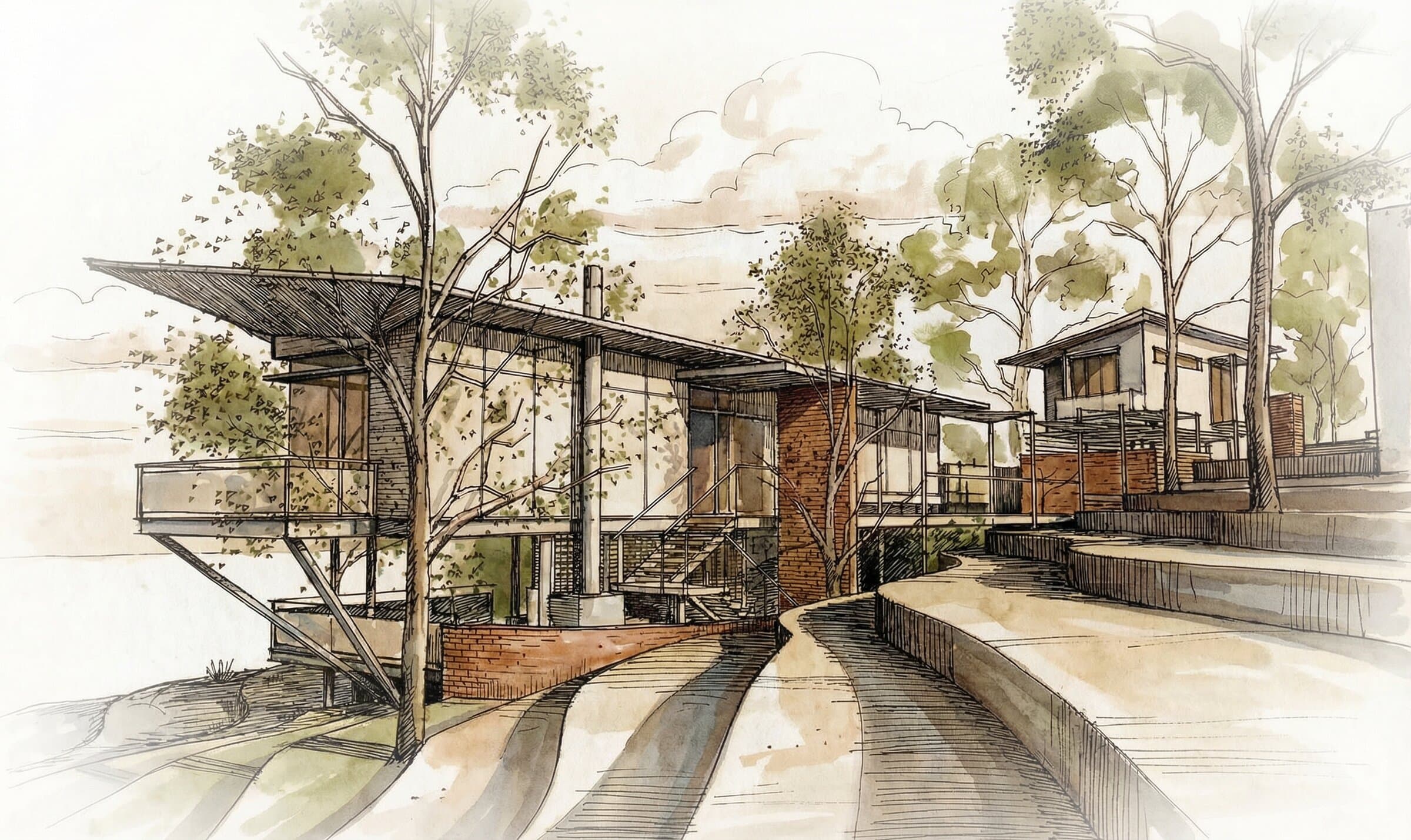
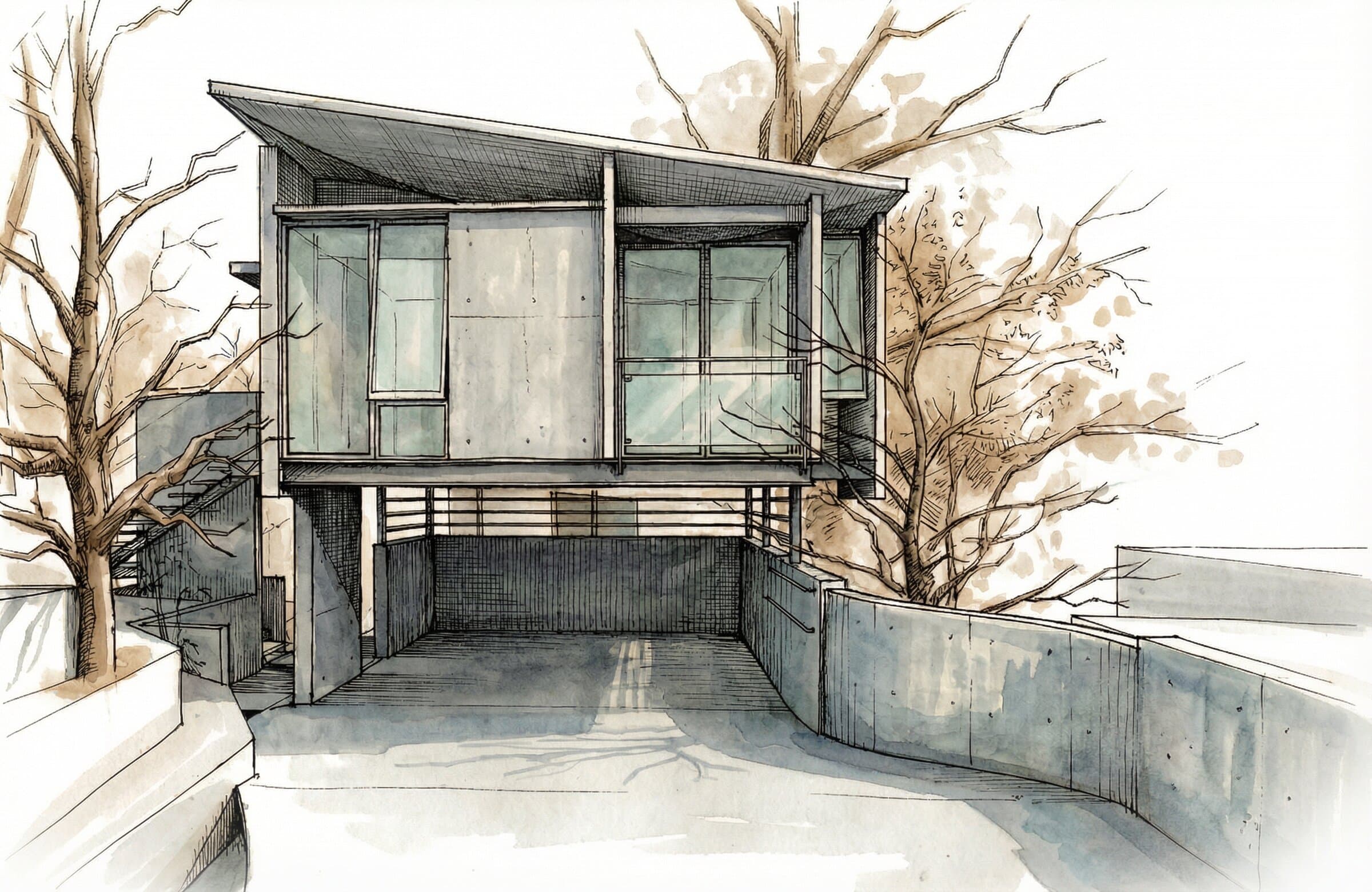
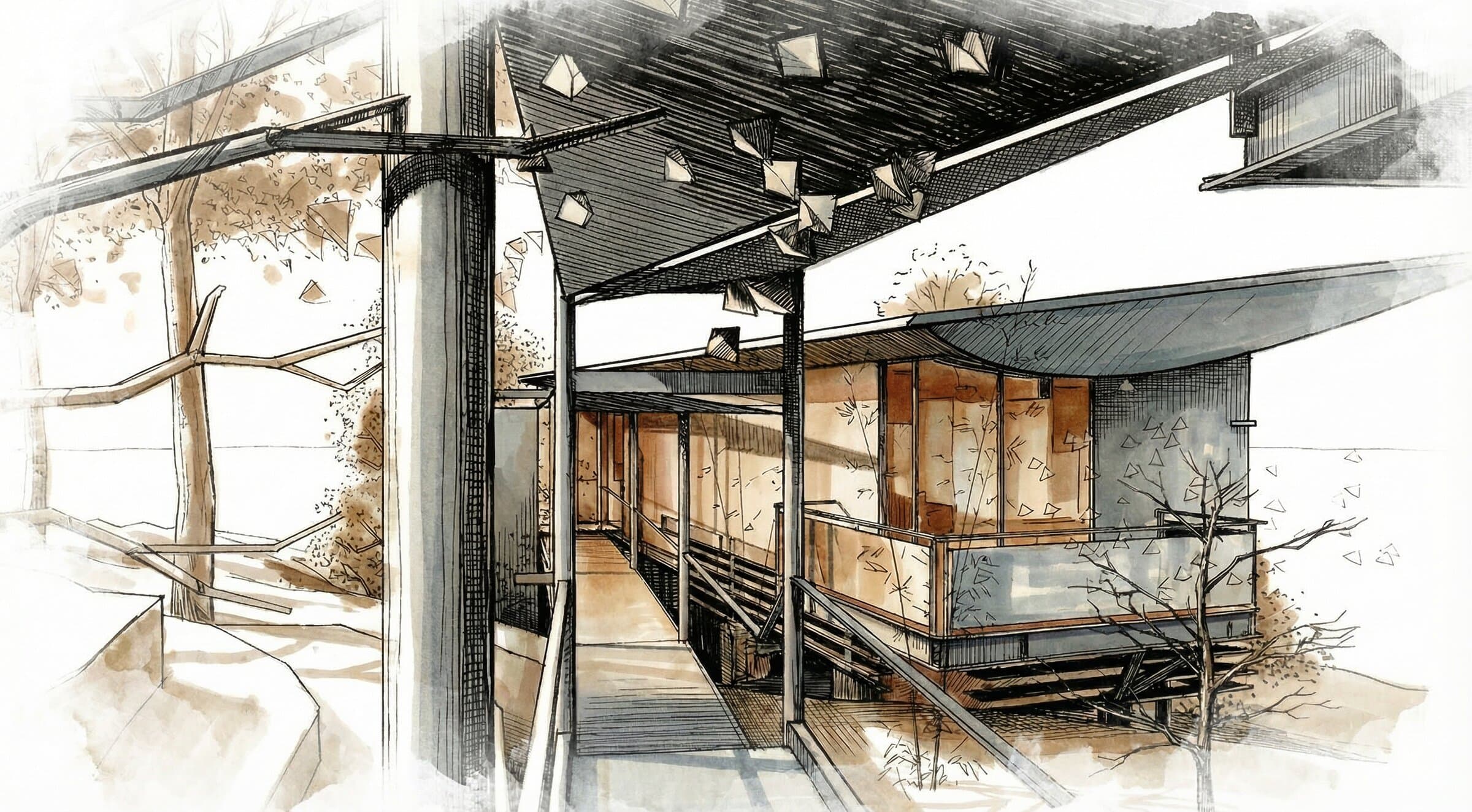
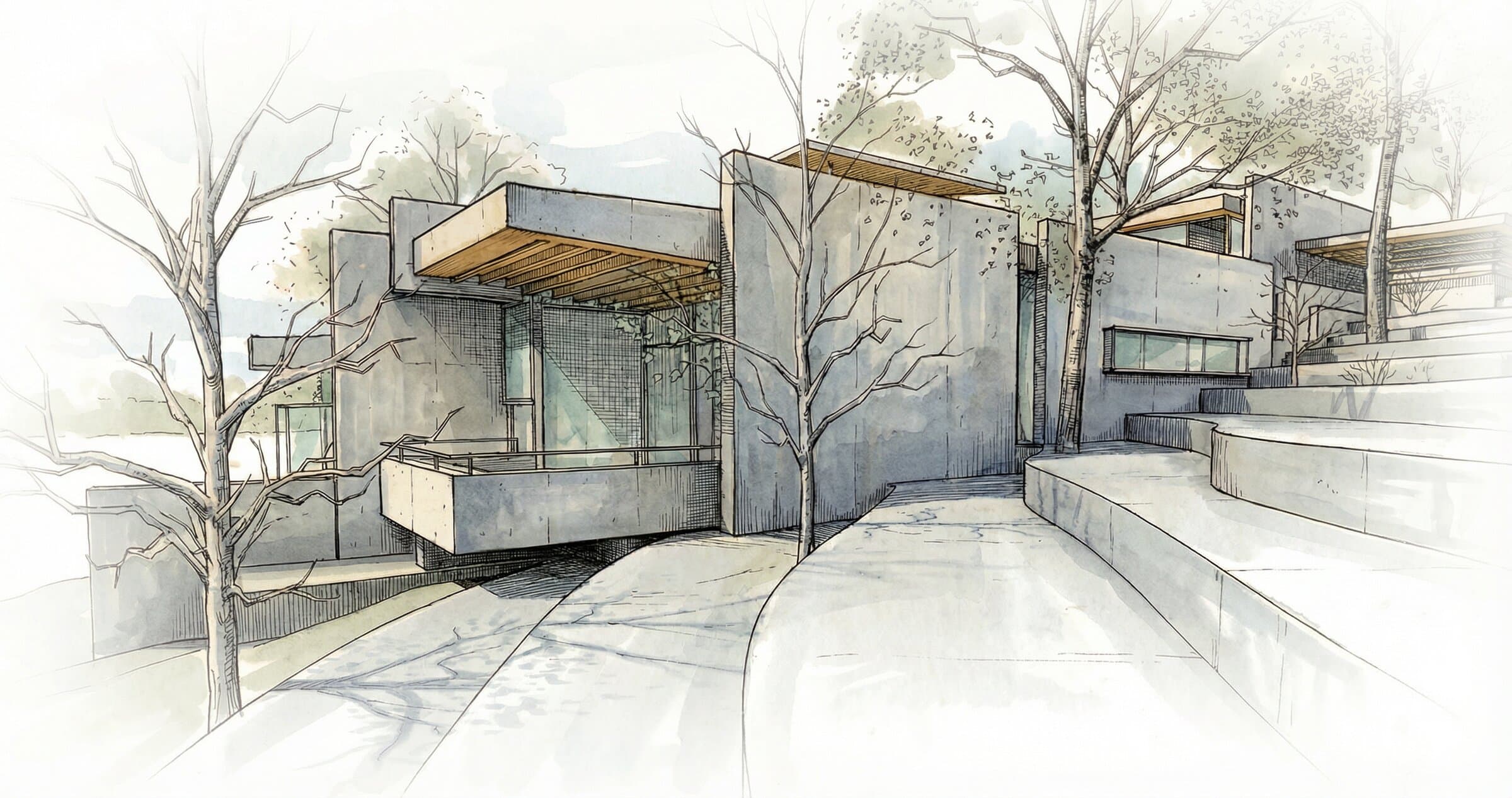
We drew on a principle articulated by Glenn Murcutt: the idea of "touching the earth lightly." The buildings would be elevated above the natural ground plane on a pole-frame structure, minimising excavation and preserving the root zones, drainage patterns, and character of the surrounding bush. The site would remain essentially as it was found, with the architecture perched within the canopy rather than carved into the slope.
The project went through multiple design iterations. The early concepts explored the site as a linear journey, a series of stepped pavilions with views in every direction. This produced a rich spatial experience but pushed costs higher through extensive groundwork and complex roofing. We progressively refined the scheme into a more compact arrangement that retained the cascading open-plan character while becoming more achievable to build.
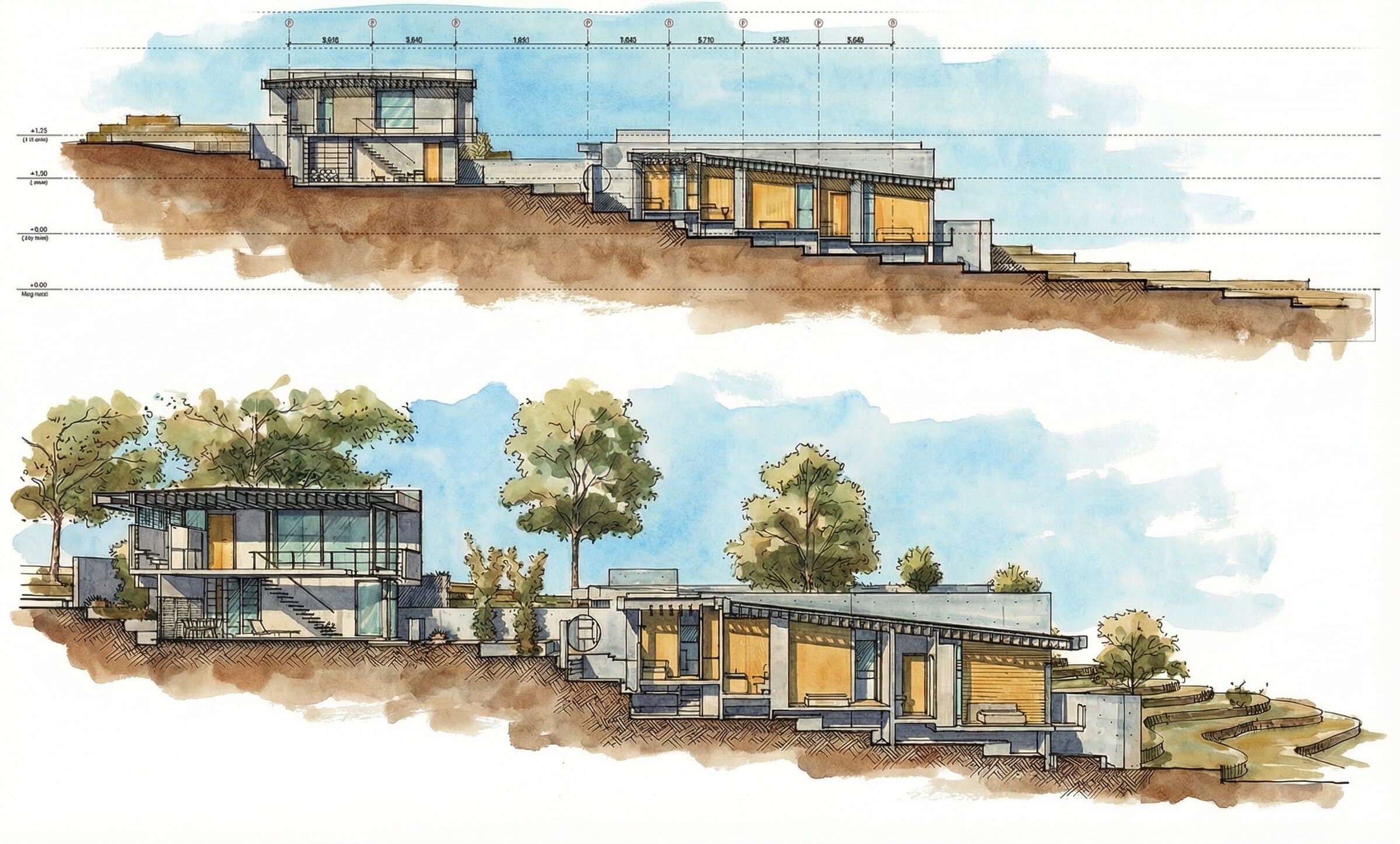
The final design consists of two buildings: the principal house deeper into the site, and the studio above a split carport closer to the street. An elevated platform bridge connects the two. The driveway follows a serpentine path down from Sylvania Street, a deliberate choice that minimised excavation while creating a sense of arrival, a gradual transition from the public road into the privacy of the bush setting.
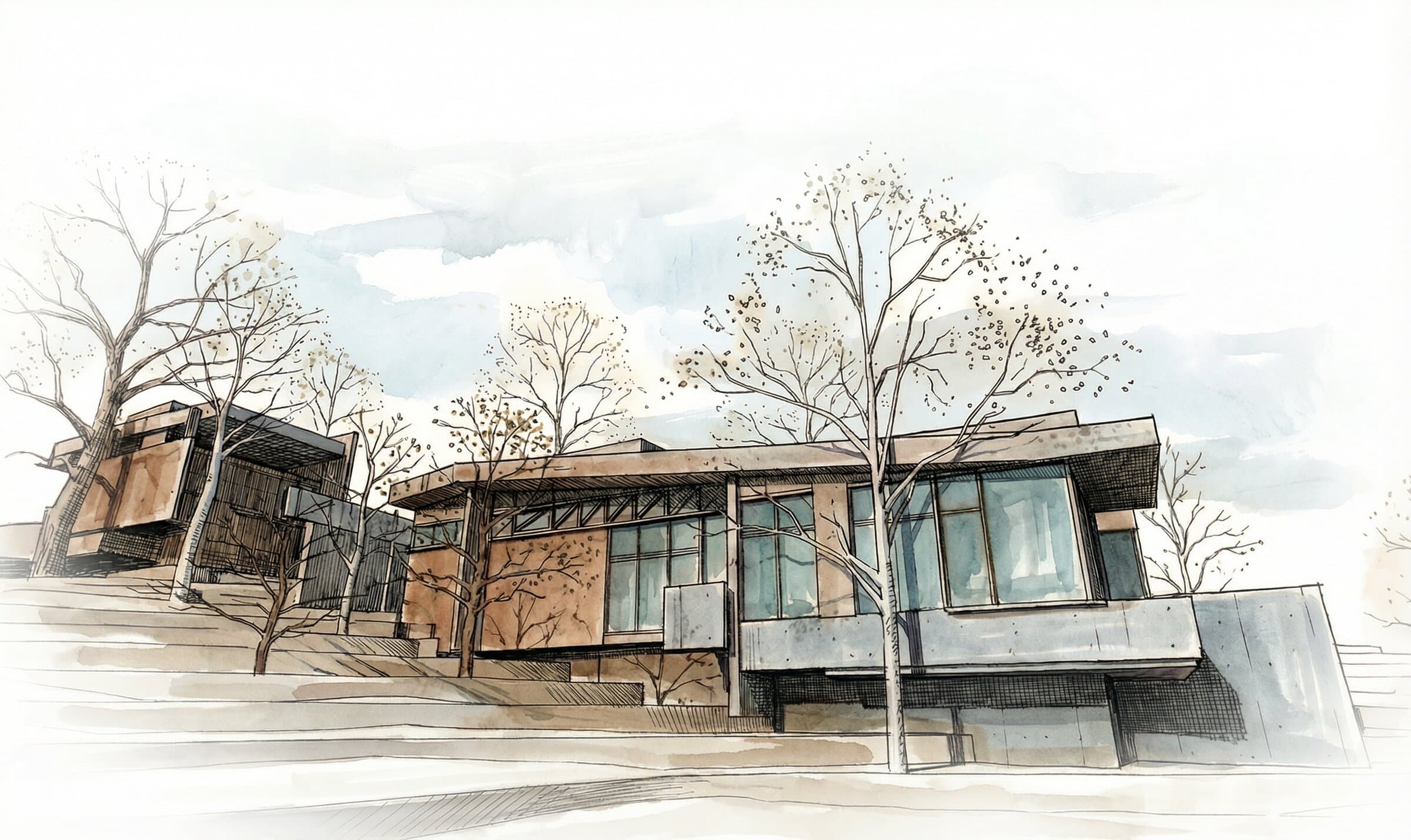
The Main Residence
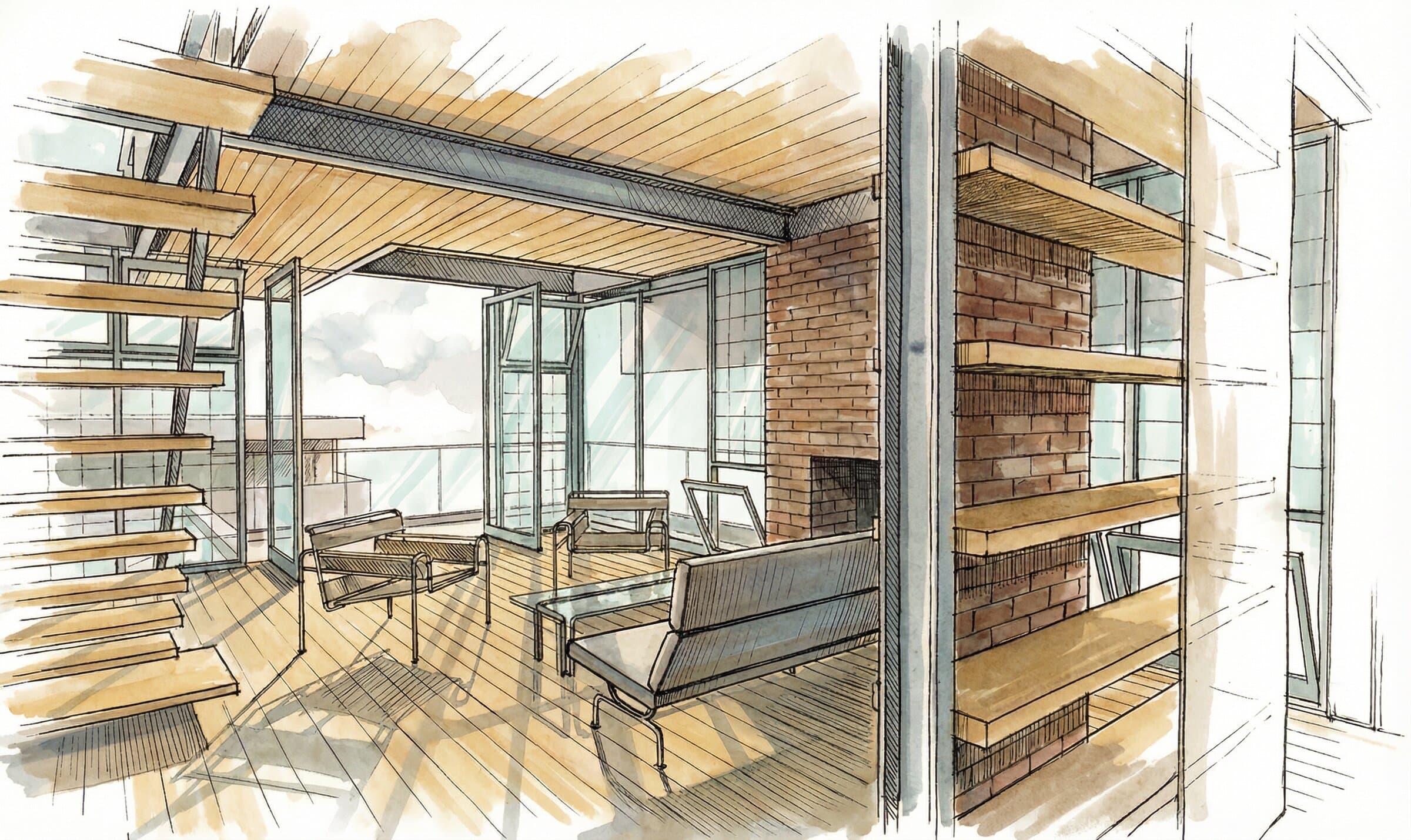
The principal house is a three-bedroom dwelling with open-plan kitchen, dining, and living spaces that cascade across the slope, each room defined by its relationship to the landscape outside. Surrounding decks extend the living spaces into the canopy. Two bedrooms have ensuites. A study doubles as a flexible third room. Feature fireplaces anchor the main spaces, a practical and atmospheric response to Mount Victoria's cold winters and the property's appeal as a winter retreat.
The house is conceived as an exercise in "looking outward." The architecture frames the surrounding bushland as its primary material. Moving through the house is an experience of progressively deeper immersion into the natural setting, from the semi-public arrival at the carport to the intensely private vantage point of the bedroom looking out over the escarpment and the valley beyond.
The Studio
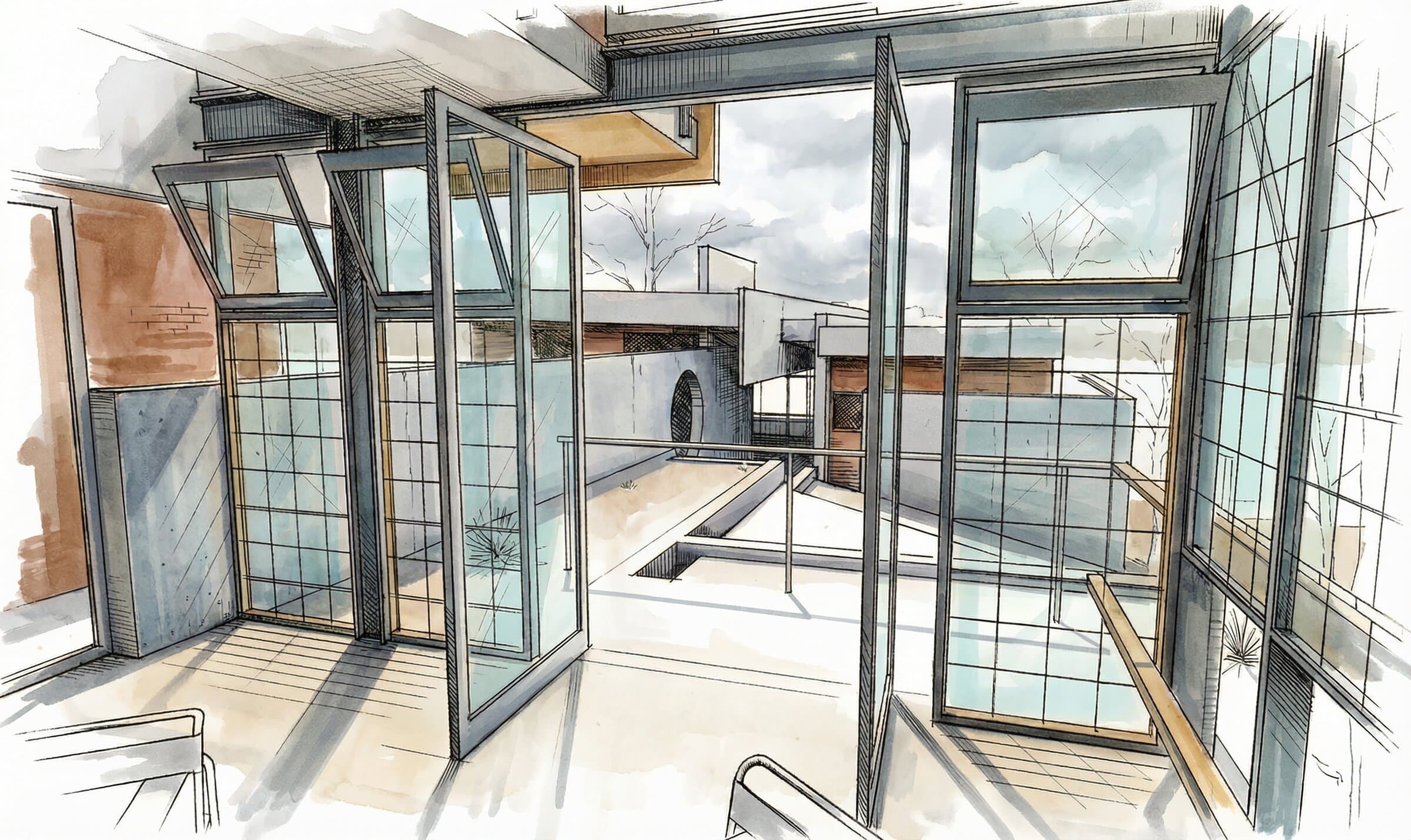
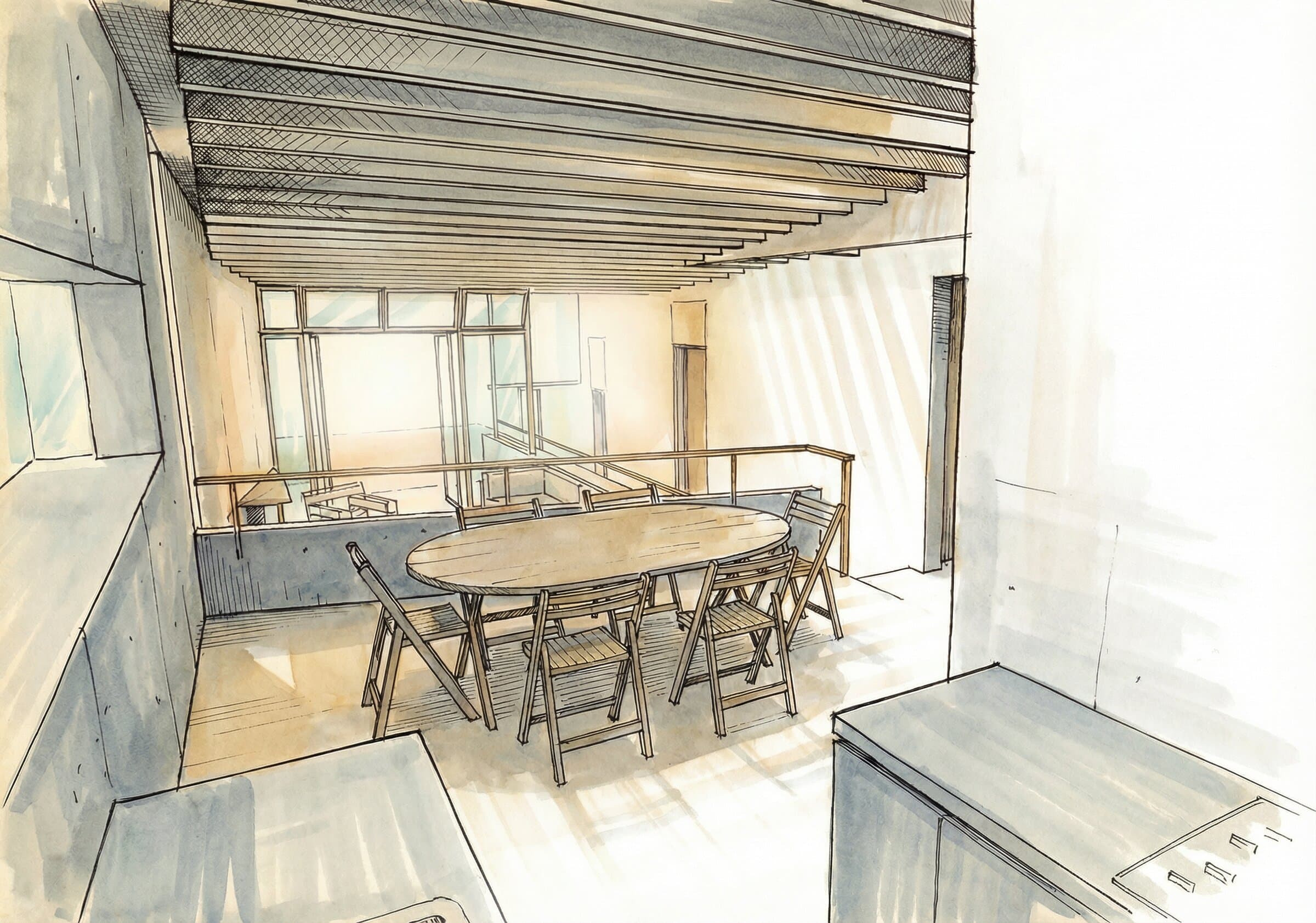
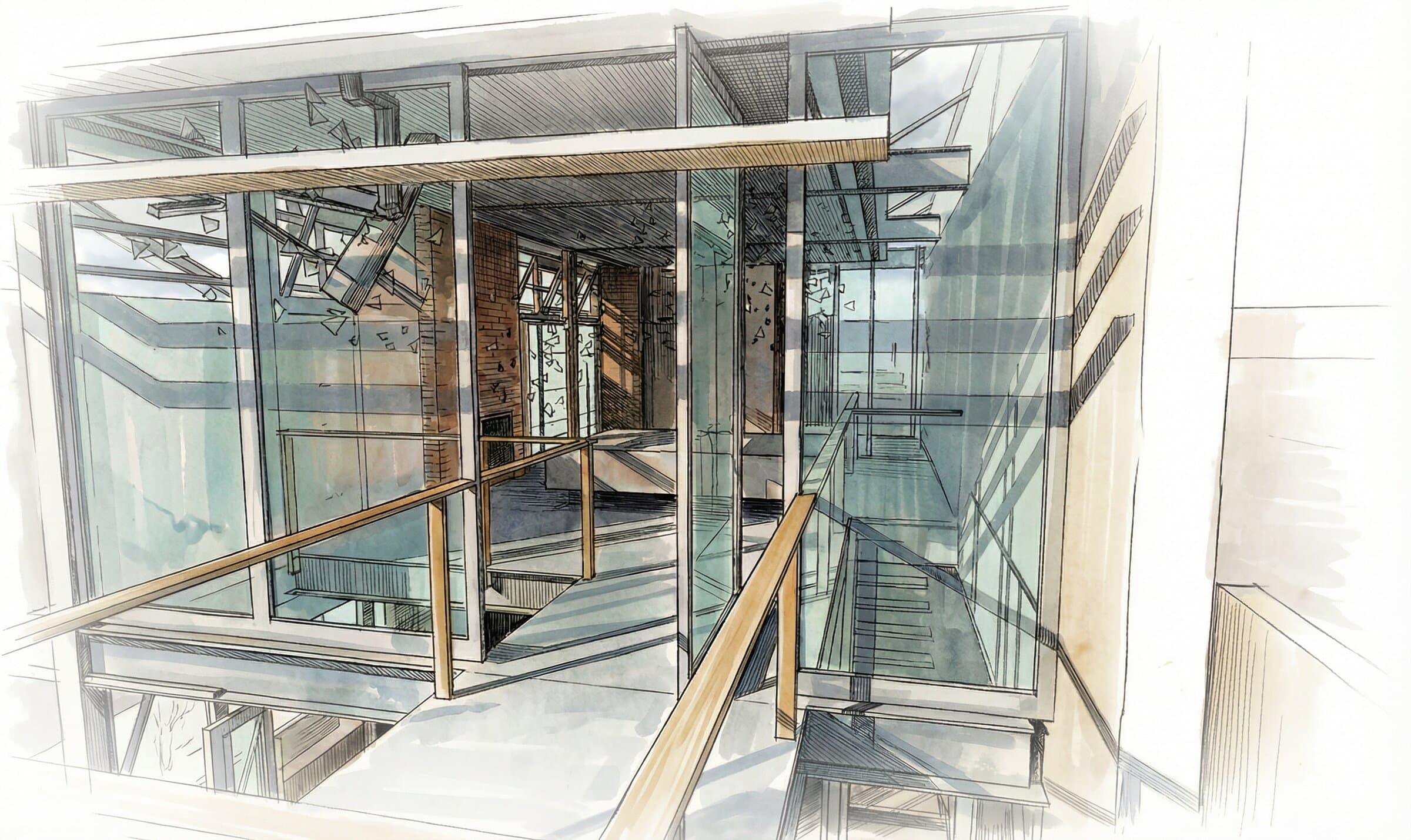
Where the main residence looks outward to panoramic views, the studio is its conceptual counterpoint: a space of "looking inward." Positioned closer to the road, the studio's controlled openings frame a cultivated foreground of rock gardens, bamboo, and water features rather than the distant bush panorama. It is an intimate, contemplative space that creates its own sense of place.
From the mezzanine balcony at the upper level, the occupant gains a single moment of broader orientation, a view out to the surrounding landscape, before descending back into the interiority of the studio below.
The studio was deliberately designed without prescribed patterns of use. It functions equally well as a creative retreat, a guest suite, or a self-contained rental property. That flexibility was central to the clients' brief: the ability to occupy the site in whatever way their life required, whether living in one building and leasing the other, using both together as a family, or leasing the entire property while overseas.
Building for the Future
The project was designed to be built in stages. Three options were developed: the whole development at once, the main house only with foundations prepared for the future studio, or the main house without the lower-level master suite. Each option protected the design intent so that future stages could be completed without compromise.
This staging strategy reflected a broader principle we apply across all our projects: designing for where you want to end up, not just what you can afford today. Daniel and Sarah could begin with the house they needed now and complete the full vision over time, without reworking the design or sacrificing spatial quality along the way.
The Outcome
The Mt Victoria Residence received DA approval from Blue Mountains City Council and was issued for construction tender. Every layer of the Blue Mountains planning framework applied to this site, and the project navigated all of them: environmental conservation zoning, escarpment protection, slope constraints, bushfire flame zone, and the regulatory pivot from commercial eco-tourism to residential classification.
But the planning approvals are not the story. The story is two buildings that belong to their setting. A main house that draws you deeper into the landscape with every room. A studio that turns the lens inward and creates its own world within 60 square metres. A structural approach that preserves the bush rather than clearing it. And a design flexible enough to adapt to whatever the clients' life looks like in five, ten, or twenty years.
This project captures what we believe good residential architecture should do: take a site that most people would call too difficult and find the design that could only exist there.