

Portfolio CV · Mixed-Use — Residential / Commercial / Retail — International Design Competition
30 Van Ness Avenue — San Francisco
Category
Mixed-Use — Residential / Commercial / Retail — International Design Competition
Location
30 Van Ness Avenue, San Francisco, California, USA
Size
N/A
Year
2017
Portfolio CV: Noel Yaxley worked on this project as Architect at FJMT Studio. It is shown as part of his individual project experience, not as a Yaxley Studio project.
The Project
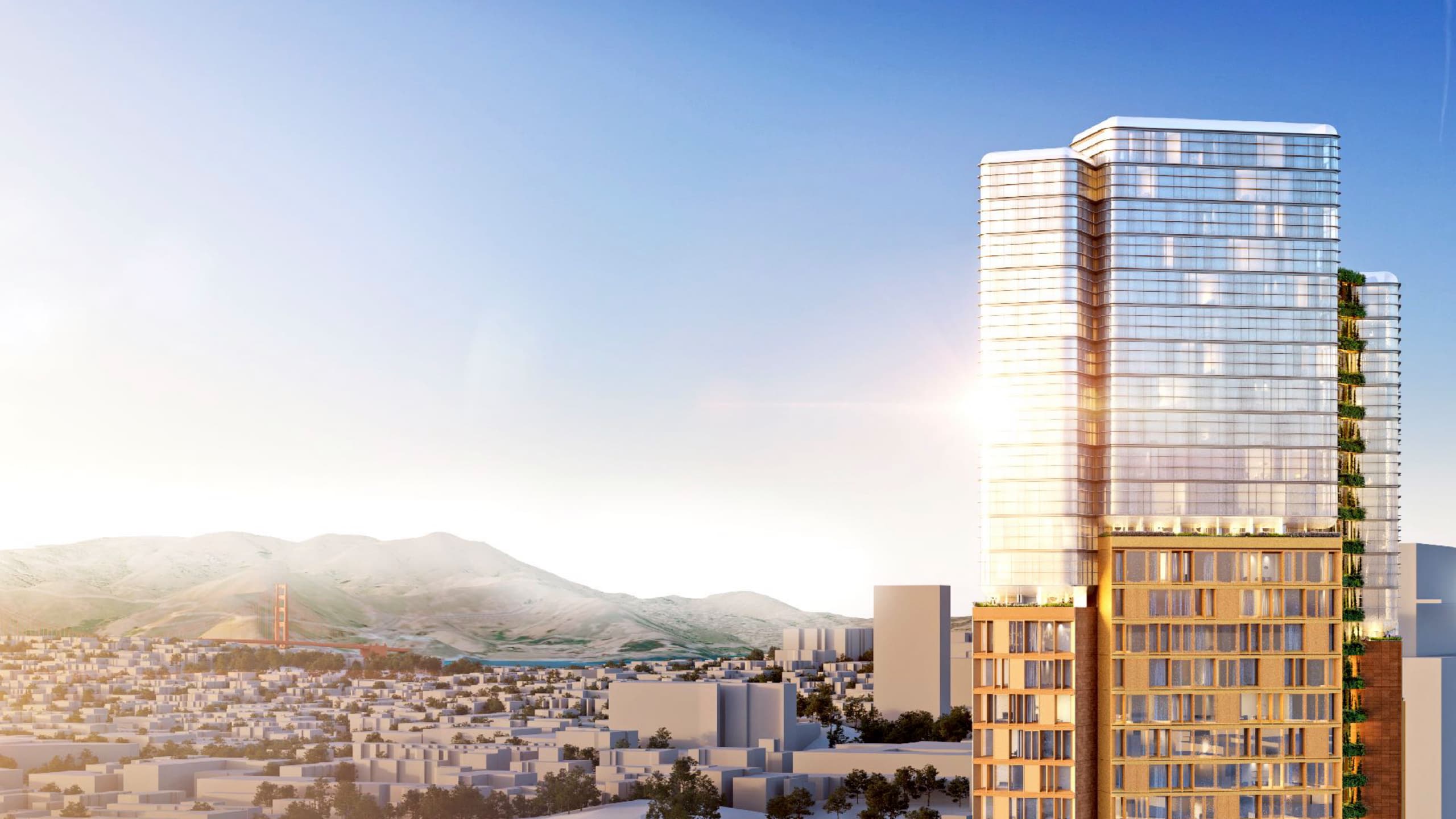
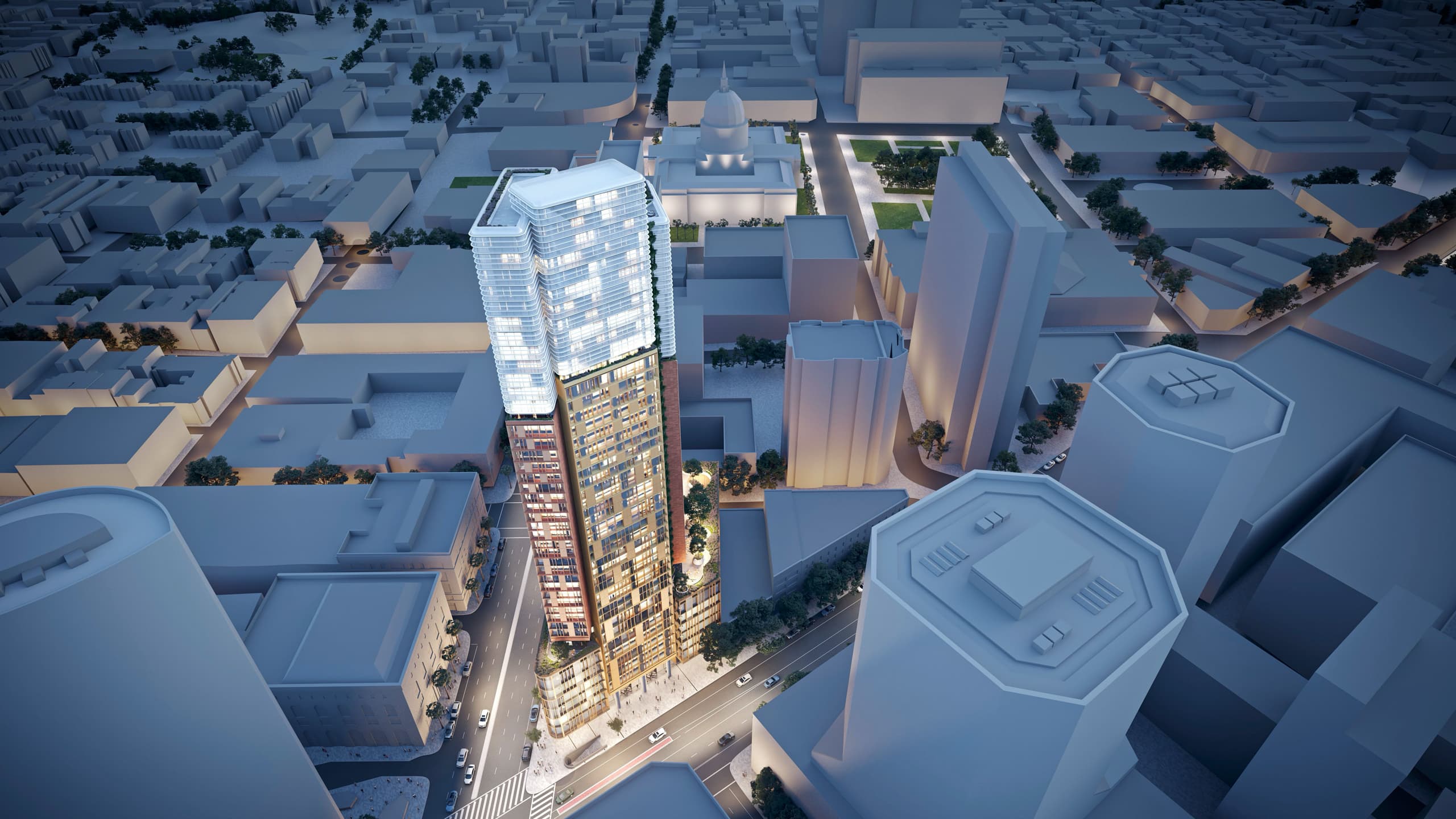
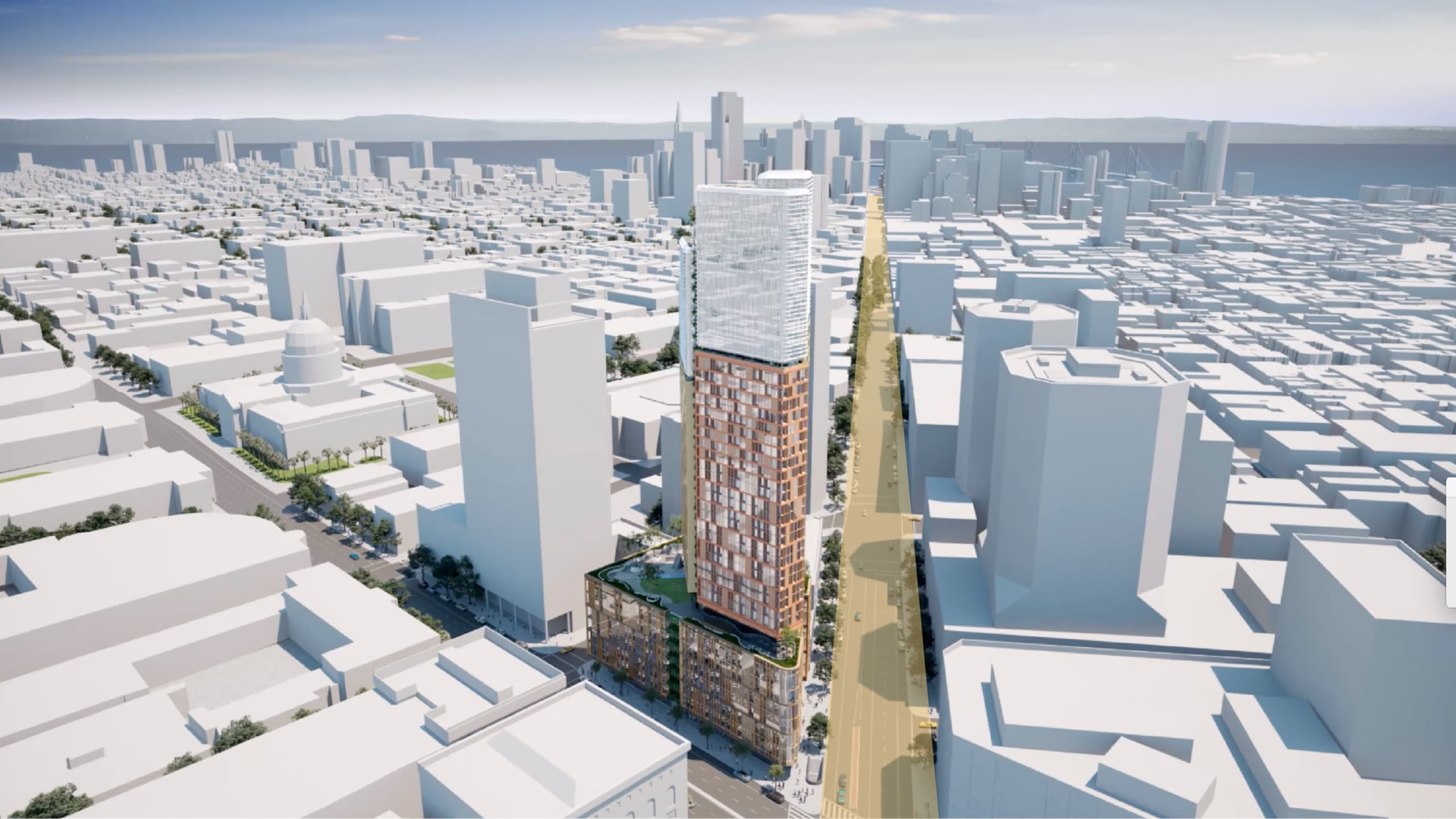
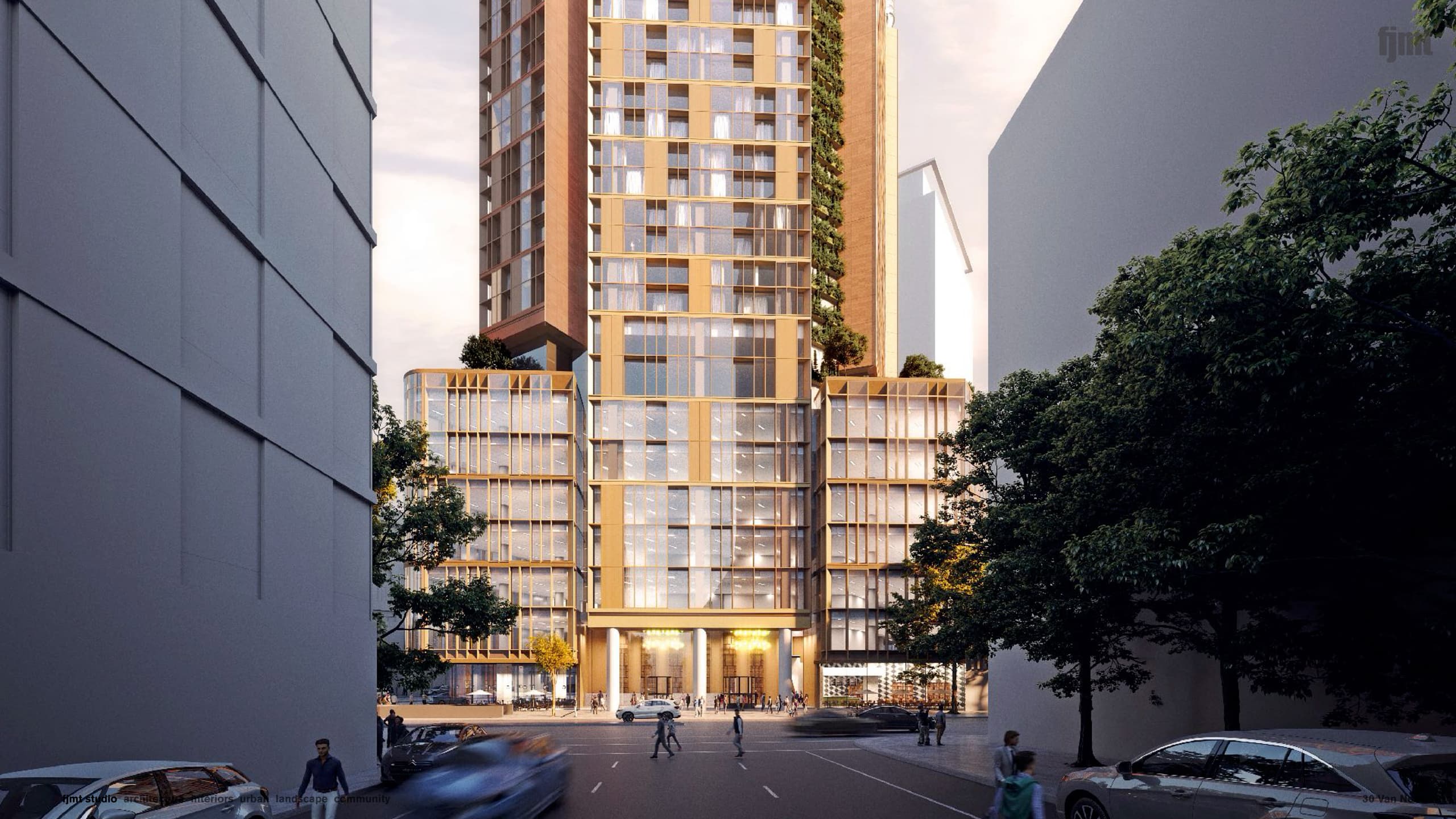
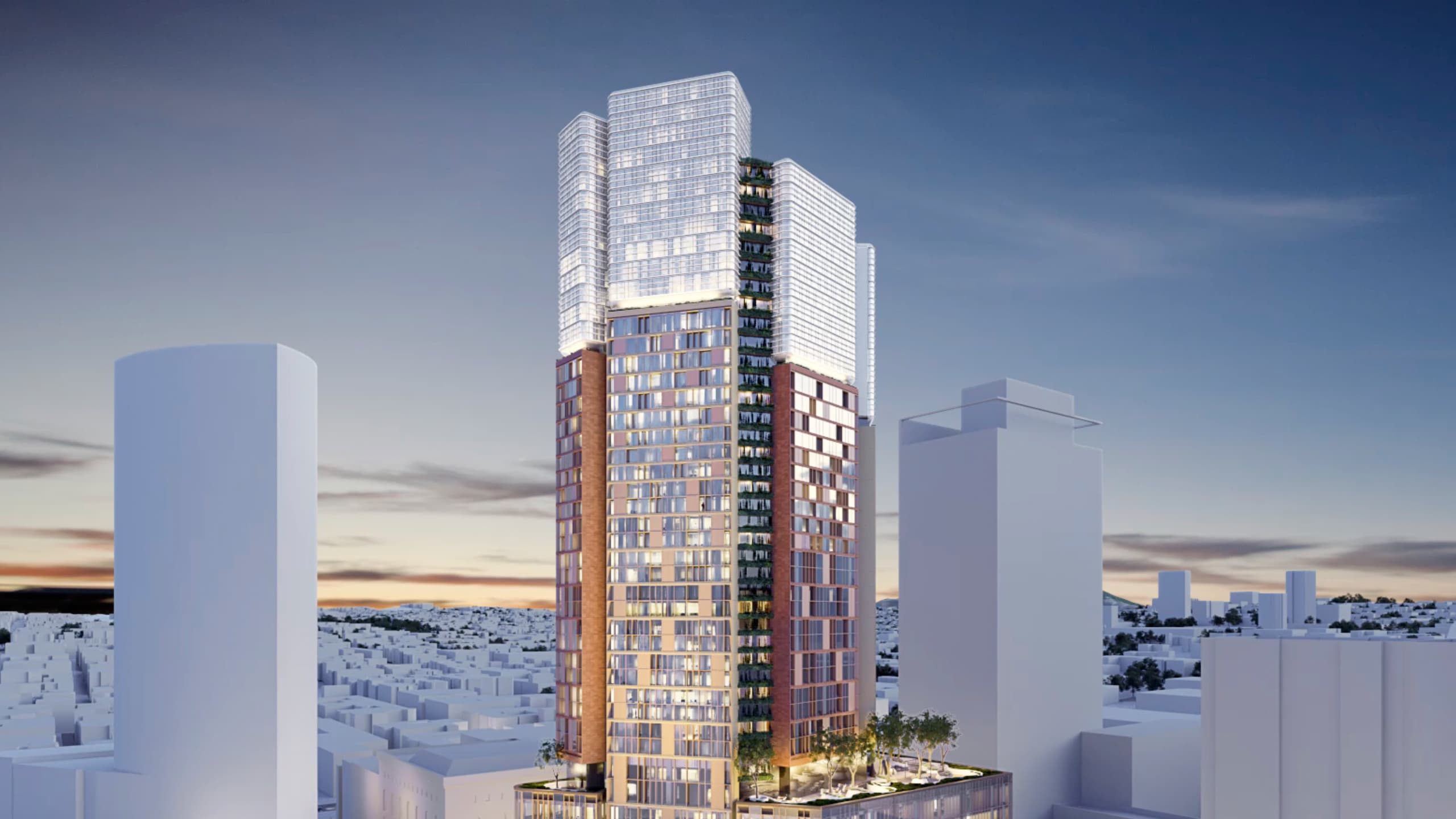
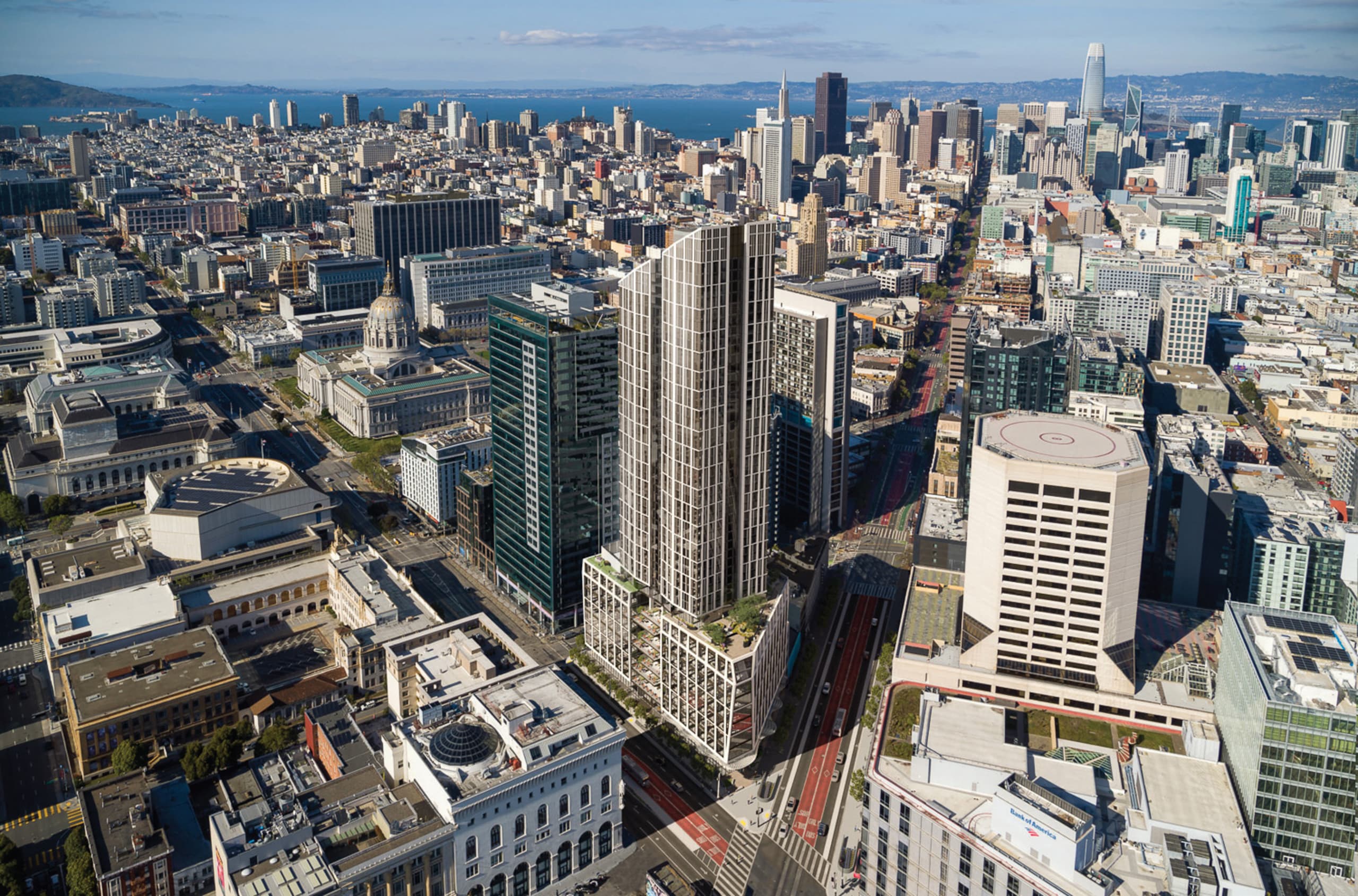
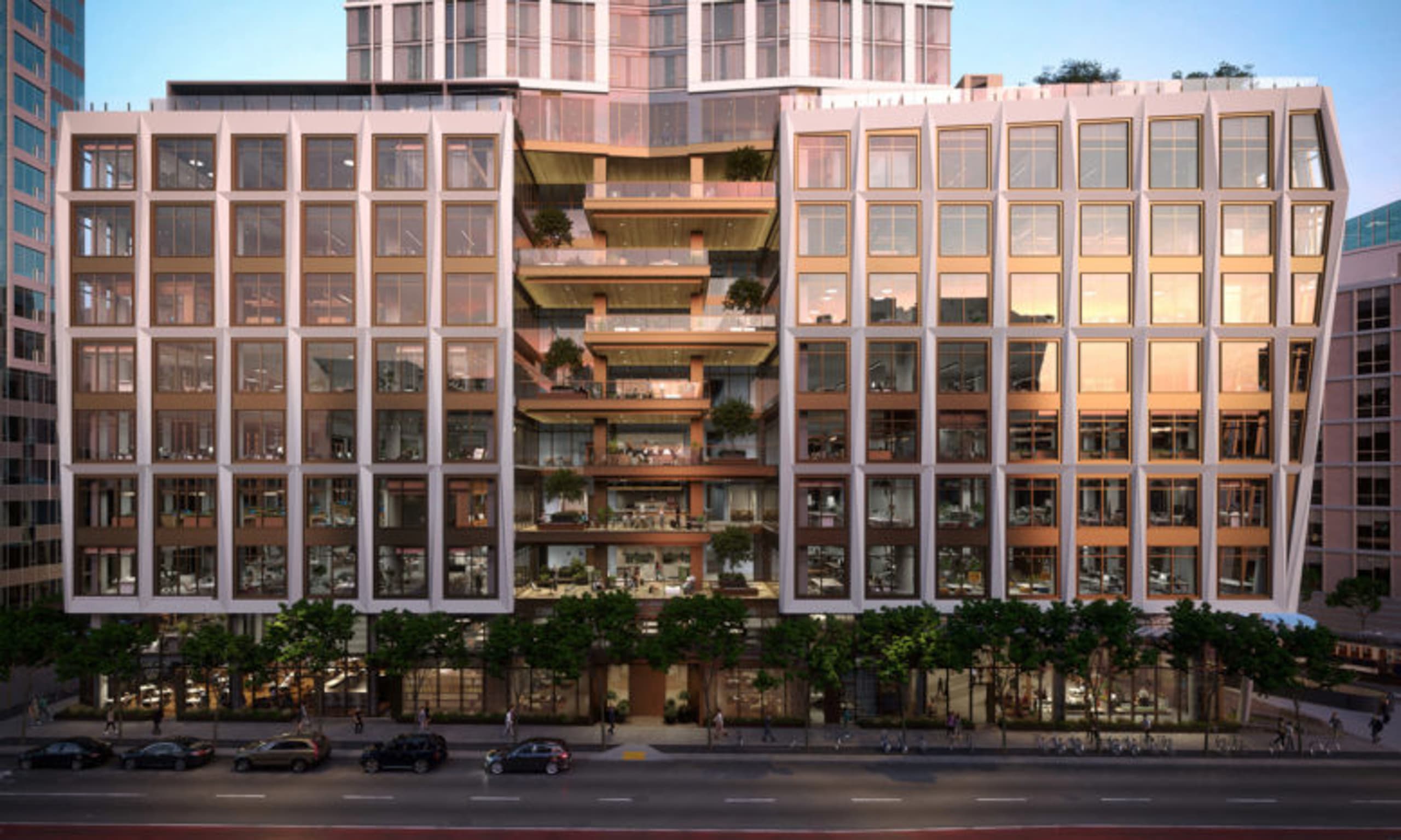
Lendlease invited FJMT Studio to compete for a 47-storey mixed-use tower at 30 Van Ness Avenue, the corner of Van Ness and Market Street in San Francisco's Civic Center. The brief called for roughly 333 apartments above a 252,900-square-foot commercial podium with activated retail at street level. It was one of those rare sites where every decision matters: a triangular corner on the city's widest boulevard, flanked by City Hall and a rapidly changing Mid-Market corridor.

The Challenge
Designing for San Francisco meant adapting to an entirely unfamiliar regulatory and seismic environment at competition pace. The irregular corner geometry made apartment planning genuinely difficult, every floor plate had to reconcile liveable unit layouts with a sculptural tower form. On top of that, we had to manage shadow impacts on the civic precinct, wind effects at street level, and the expectations of a community with strong opinions about height and massing.
My Approach
I focused on two things within the FJMT team: testing apartment layouts across the tower's floor plates, and exploring massing options that responded to the corner condition. The geometry meant no standard residential template would work, so I iterated through dozens of layout configurations to find arrangements that were both efficient and genuinely liveable. I also worked on the massing studies that balanced yield against view corridors, north to the Golden Gate, east to the Bay Bridge, south along Market Street. We prepared physical models, rendered perspectives, and detailed design boards to communicate the scheme's intent.

The Outcome
We didn't win. Hassell took the initial competition, and the project later passed through Solomon Cordwell Buenz and Gensler before construction started in 2022 and stalled in 2023 amid San Francisco's post-pandemic market downturn.
But the experience stayed with me. Working at speed in an unfamiliar seismic, regulatory, and cultural context taught me how to stress-test my design methodology against conditions I hadn't trained for. The discipline of resolving apartment planning within a geometrically constrained tower is something I draw on constantly now. It's the kind of problem-solving that sits at the core of what Yaxley Studio does.