

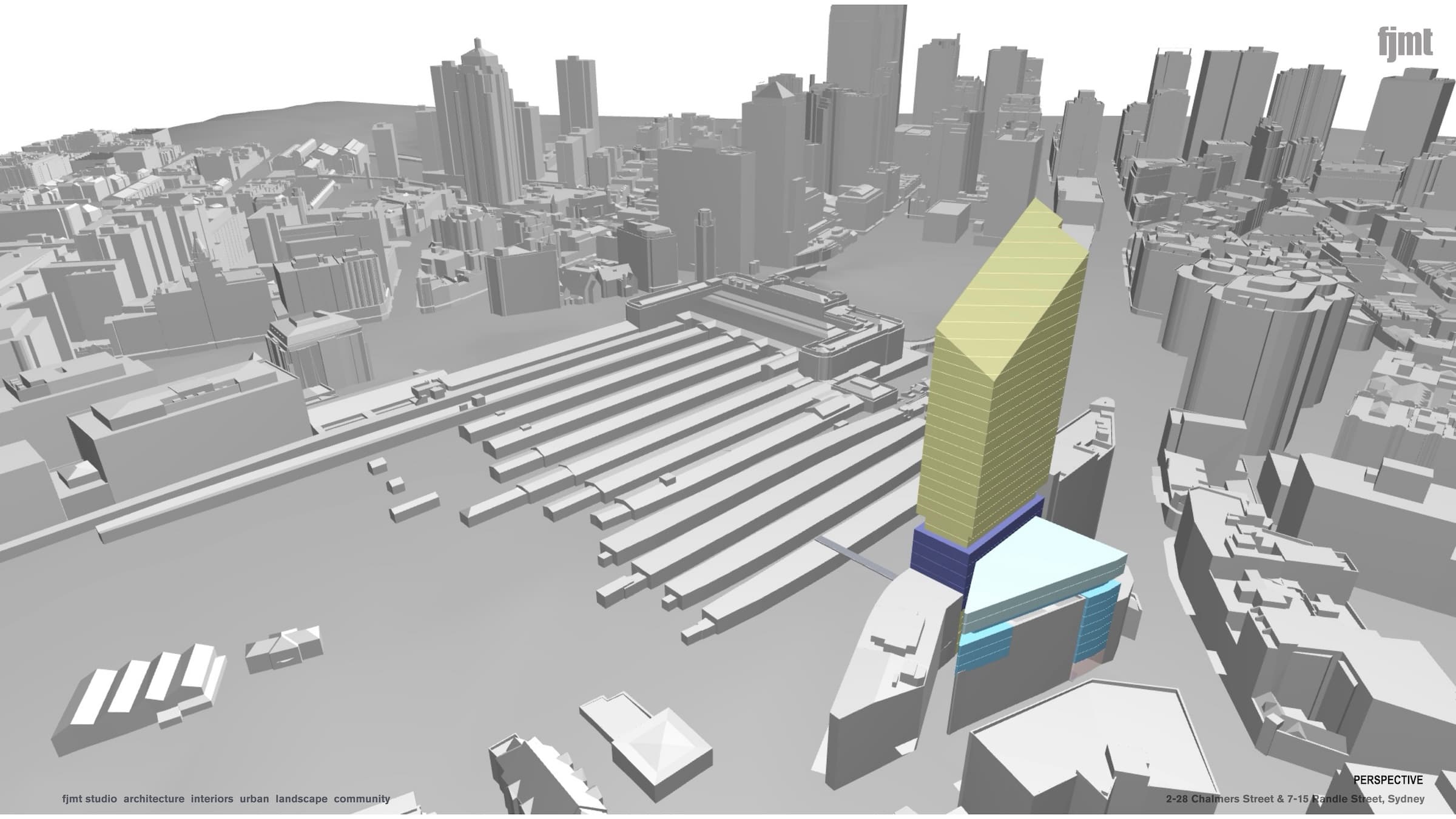
Portfolio CV · Mixed-Use — Residential / Commercial / Hotel — Feasibility Study
2–28 Chalmers Street & 7–15 Randle Street — Surry Hills Feasibility
Category
Mixed-Use — Residential / Commercial / Hotel — Feasibility Study
Location
2–28 Chalmers Street & 7–15 Randle Street, Surry Hills, Sydney NSW
Size
N/A
Year
2015
Portfolio CV: Noel Yaxley worked on this project as Architect at FJMT Studio. It is shown as part of his individual project experience, not as a Yaxley Studio project.
The Project
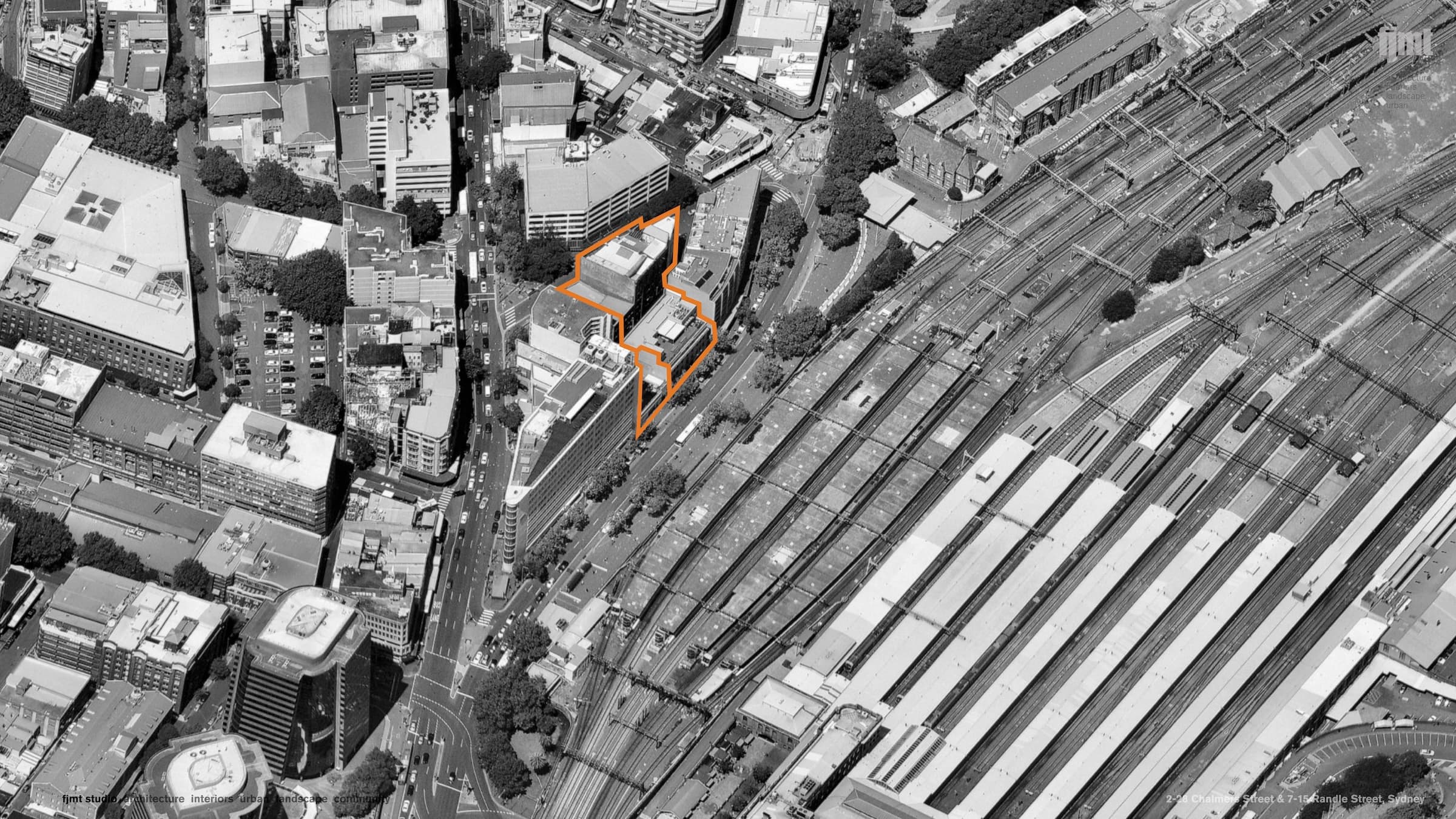
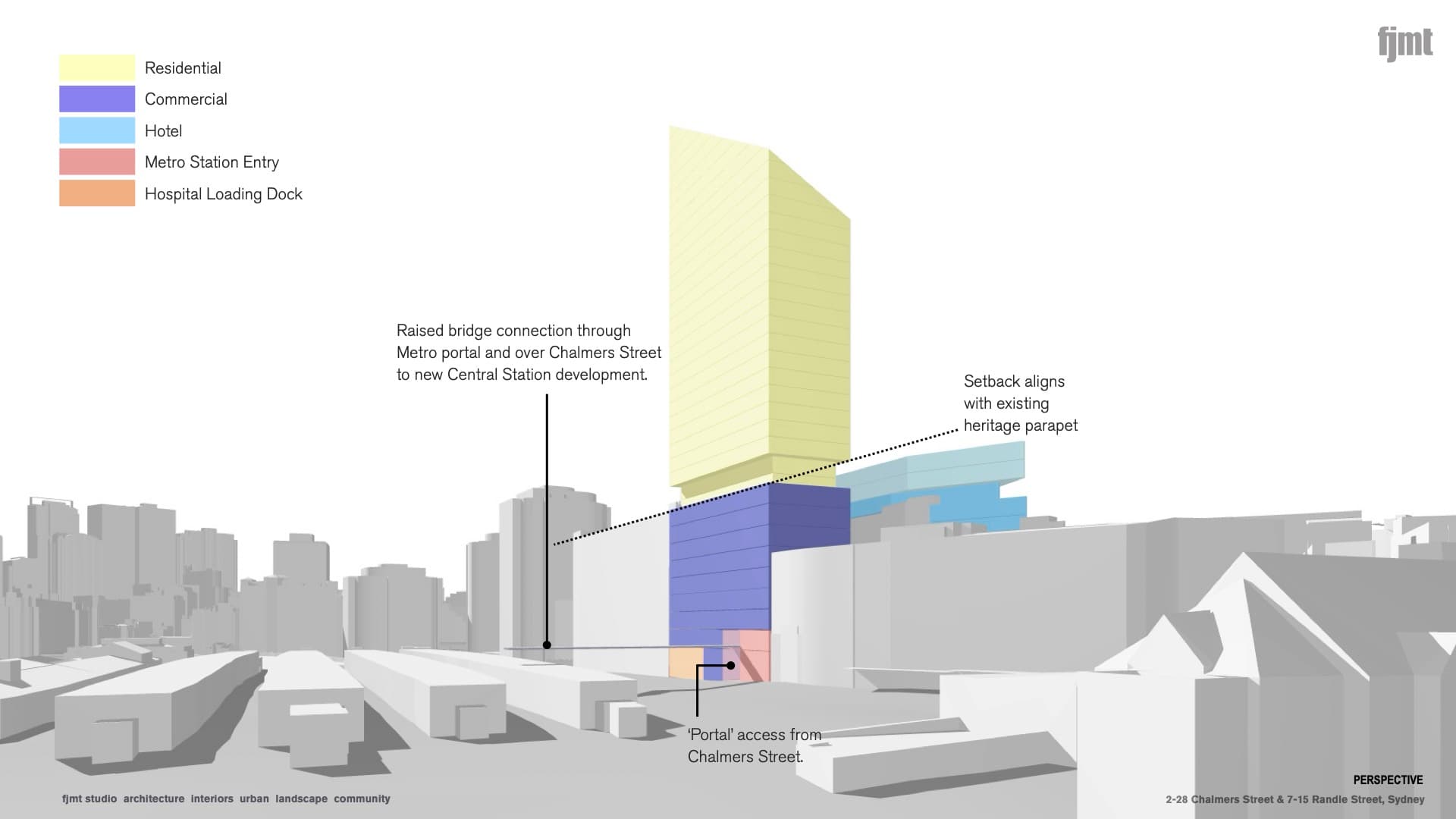
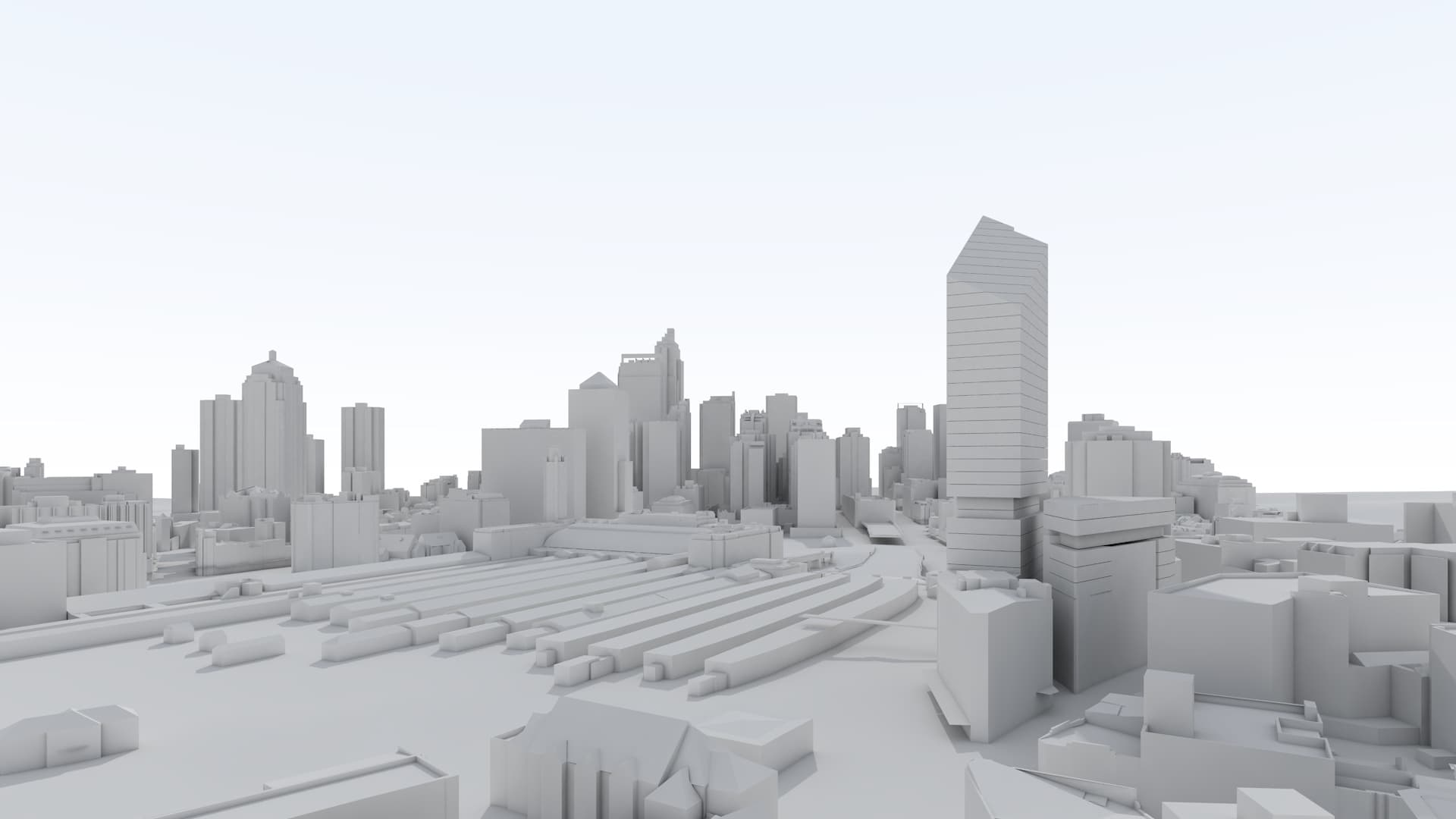
This feasibility study for Lendlease explored the development potential of a collection of sites on the eastern edge of Central Station, the threshold between the CBD rail corridor and the fine-grained urban fabric of Surry Hills. The study investigated a mixed-use tower combining residential, commercial, and hotel uses, with a transformative piece of urban infrastructure: a through-site pedestrian link connecting Central Station directly into the Surry Hills neighbourhood beyond.
The Challenge
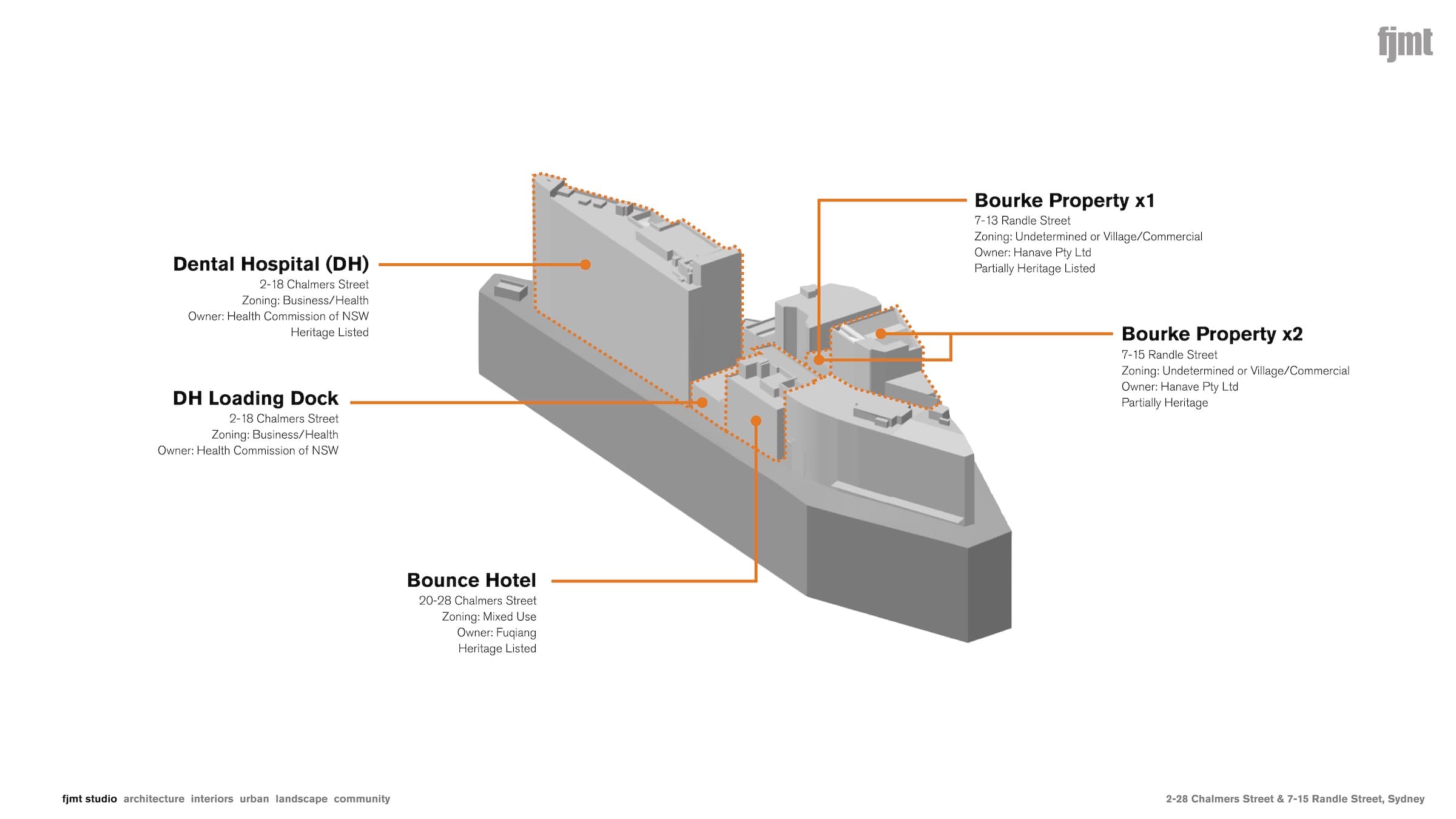
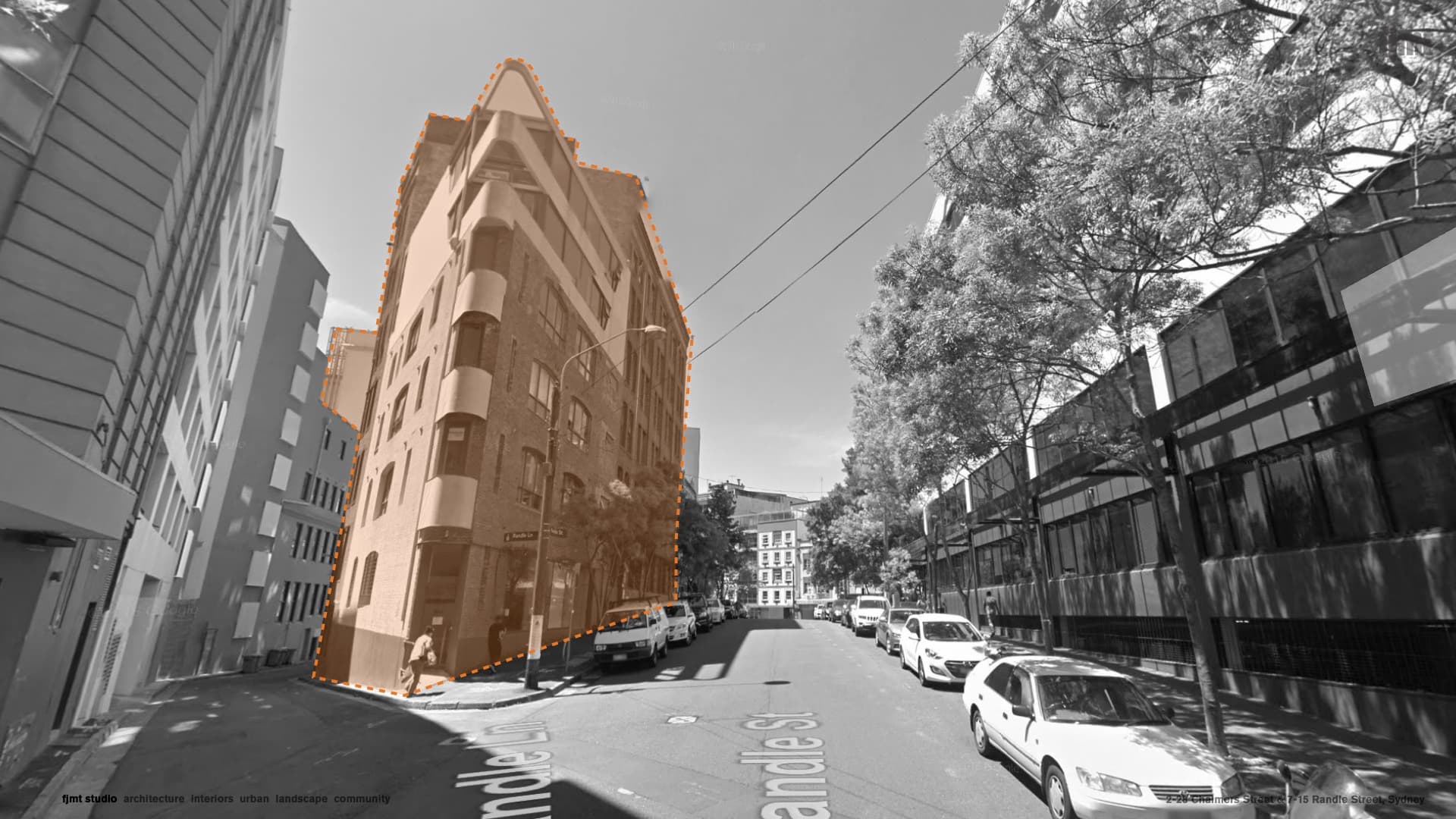
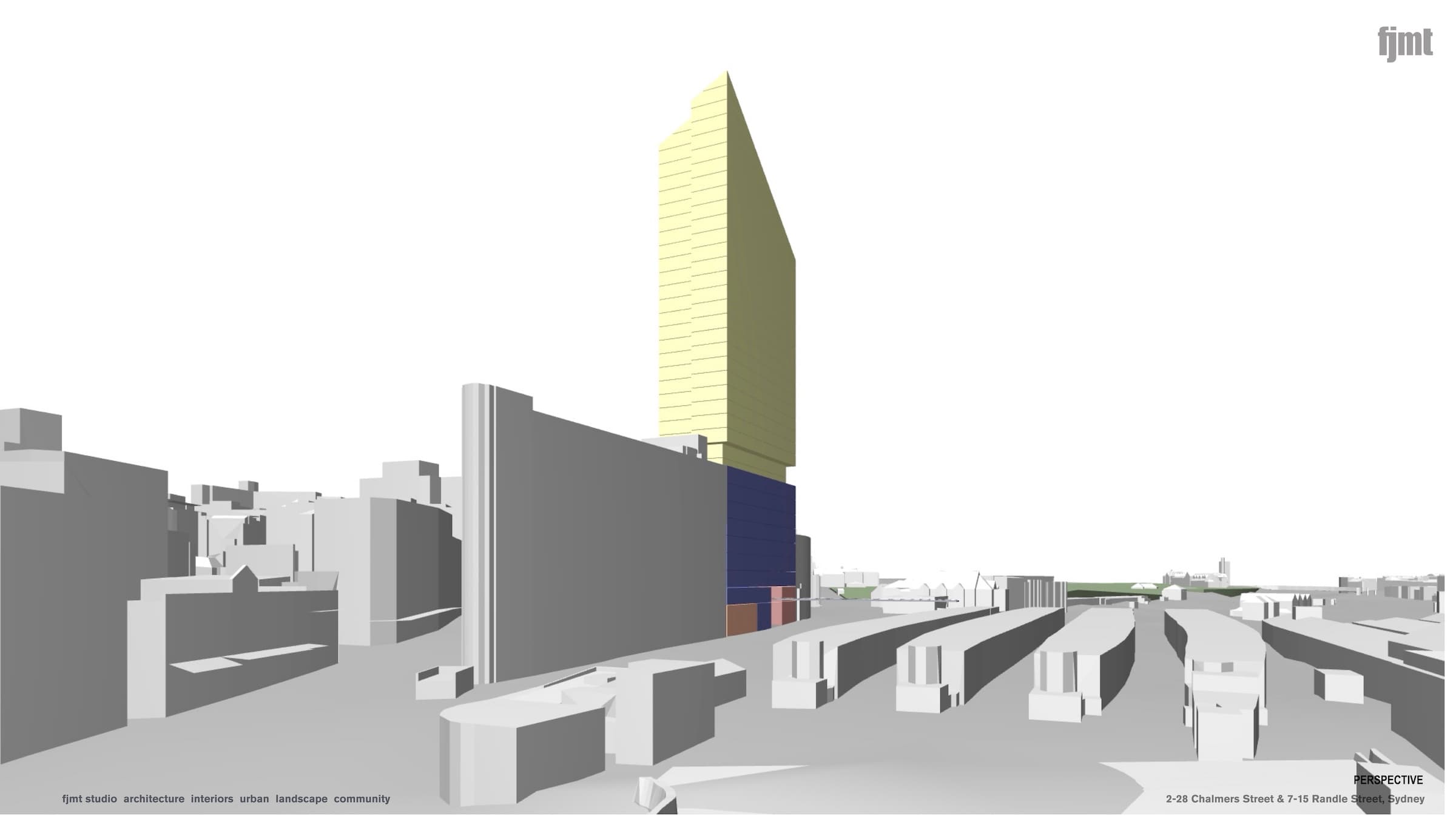
The site comprised several parcels with different ownership, zoning, and heritage conditions, including the former Dental Hospital, the Bounce Hotel, and the R.C. Henderson Hat Factory on Randle Street. The building massing was driven primarily by solar access controls from the Central Sydney Planning Strategy, requiring careful three-dimensional modelling of the maximum permissible envelope. On top of that, the study needed to resolve how new development would integrate with the heritage buildings, particularly the hat factory which already had its own hotel DA. The through-site link concept meant the ground plane had to facilitate genuine pedestrian connectivity, not just serve as a base for yield above.
My Approach
I worked through the planning regulations in detail and collaborated with the consultant team to develop the feasibility proposition. This meant systematically testing massing options within the solar envelope, resolving the programme stacking, residential at the top, commercial in the mid-levels, hotel below, and exploring how the through-site link and a future Metro connection could be delivered within the development. The tower's podium was designed to align with existing heritage parapets, mediating between new development scale and the surrounding streetscape character. I also explored a raised bridge connection through the emerging Metro portal and over Chalmers Street.
The Outcome
The study did not proceed to a DA, but it gave Lendlease a thorough understanding of the site's potential and the urban planning opportunities around Central Station connectivity. The broader precinct has since evolved dramatically with Tech Central and the construction of the Sydney Metro station on Chalmers Street, precisely the kind of transport infrastructure the study anticipated. This project taught me how to think about development as more than just yield, how through-site links and connectivity strategies can be woven into private development to deliver genuine public benefit. That way of thinking about projects as urban contributions, not just buildings, is central to how I approach work at Yaxley Studio.