
Tertiary Education
St Andrew's College — Learning and Performing Arts Centre
Category
Tertiary Education
Location
19 Carillon Avenue, Camperdown NSW
Size
$13m (LPAC); $98m (Campus Masterplan)
Year
2015
The Project
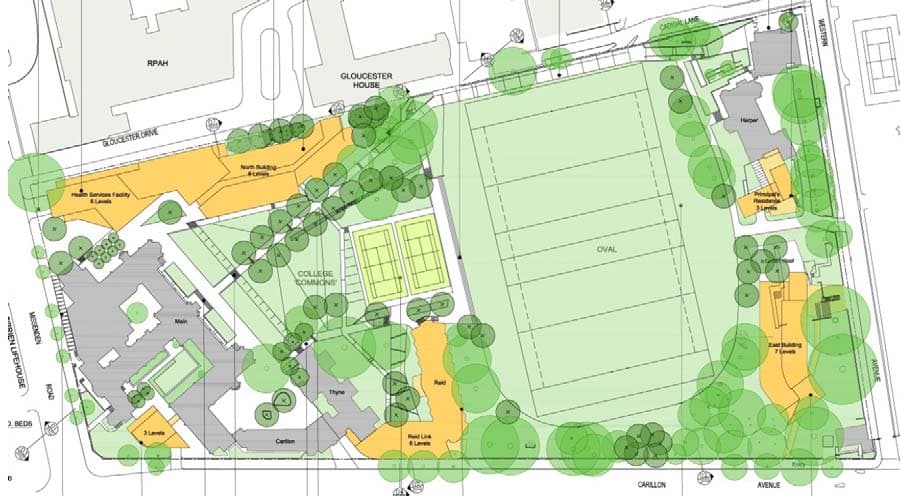
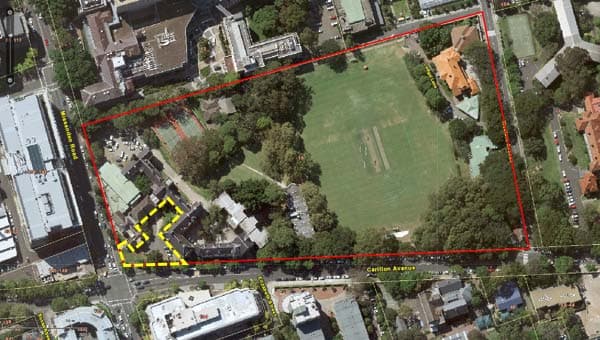
St Andrew's College is a residential college within the University of Sydney, established in 1867 and set across a four-hectare site in the south-west corner of the Camperdown campus. Its principal building is a three-storey sandstone Gothic Revival landmark with an elaborate roofscape, tower and fleches. FJMT Studio was engaged to prepare a campus masterplan and then design a new Learning and Performing Arts Centre (LPAC) to be inserted into this heritage precinct. The masterplan was approved in December 2014 at a total cost of $97.8 million, with the LPAC valued at $13 million.
The Challenge
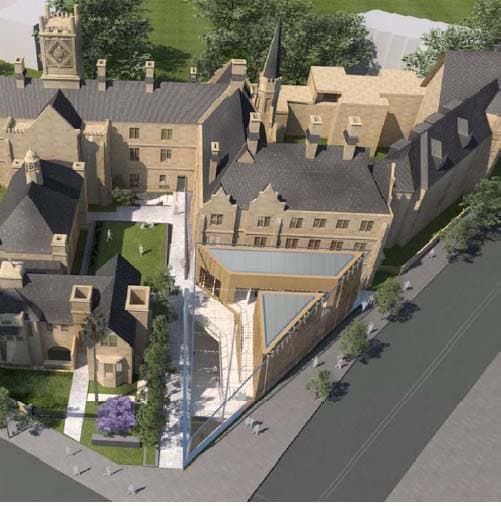
The site sits within the University of Sydney Conservation Area, and in early 2016 the NSW Heritage Council moved to recommend listing the entire university precinct on the State Heritage Register. That decision raised the stakes considerably for any new construction on the grounds. The LPAC site itself occupied an irregular wedge between the Sulman and Vaucluse Wings of the Main Building, with a three-metre level change falling away from the Carillon Avenue street frontage down to the heritage buildings. The design had to negotiate that grade change while maintaining accessible entry from the street and a respectful relationship with the surrounding sandstone fabric, all under the scrutiny of heritage consultants and a conservation management plan.
My Approach
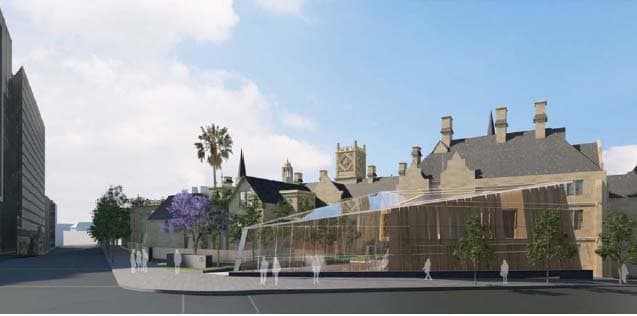
I contributed to this project as a Graduate Architect within the FJMT team, spanning both the campus masterplan development and the early LPAC design phases. My work involved preparing design development drawings, supporting the documentation for the planning submission, and helping resolve the relationship between the new glazed pavilion and the heritage wings on either side. FJMT's design proposed a transparent, timber-screened building of two below-ground and two above-ground levels, a form that deliberately defers to the mass of the surrounding sandstone while creating a contemporary space the college had never had.
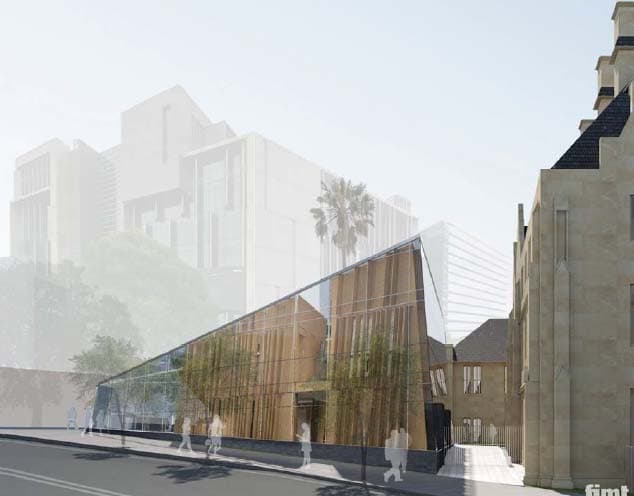
Working within a heritage conservation area at this scale meant learning how conservation management plans actually function in practice, how heritage consultant input shapes design decisions, and how a contemporary building can be simultaneously deferential to existing fabric and architecturally assertive in its own right.
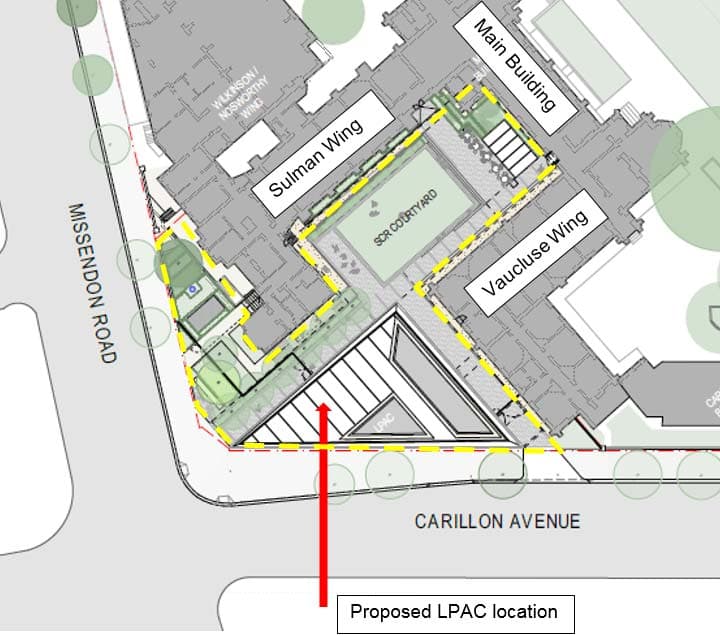
The Outcome
The DA was approved by the Central Sydney Planning Committee on 17 November 2016, with the committee resolving that a competitive design process was unnecessary given the quality of the FJMT design and the existing masterplan approval. The application received no public submissions during its exhibition period.
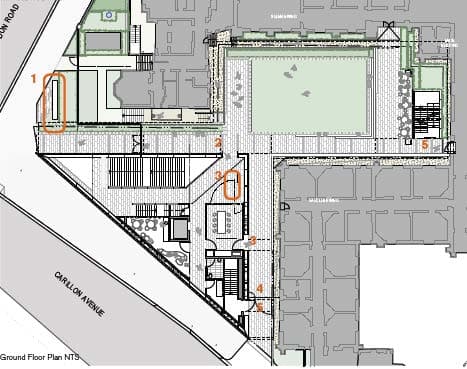
This project gave me my first real exposure to institutional heritage work, the careful intersection of campus planning, conservation, and contemporary design that characterises some of Australia's most complex educational projects. That experience of navigating heritage constraints while pushing for architectural quality has directly informed my approach at Yaxley Studio, where heritage-adjacent sites are a regular part of the work.