
Residential
87 Wolfe Street — Rooftop Extension
Category
Residential
Location
The Hill, Newcastle NSW
Size
DA Approved
Year
2013–2014
The Project
87 Wolfe Street is a modernist concrete residence in The Hill, one of Newcastle's most historically significant and sought-after suburbs, perched above Newcastle Beach with commanding views across the harbour. The existing building was designed by Brian Suters AM, one of Australia's most influential regional architects, whose practice shaped Newcastle's built form over five decades. Brian was awarded the Member of the Order of Australia for his service to architecture, received an honorary doctorate from the University of Newcastle, and was named Freeman of the City. His Wolfe Street residence won the prestigious Blacket Award for Architecture in 1980.
Brian passed away in April 2025, leaving behind a remarkable legacy of civic, institutional, and residential buildings across Newcastle and beyond. This was his home for many years before our clients purchased it.
The Challenge
The building sits on a narrow, steeply sloping site within The Hill Heritage Conservation Area. It was already three storeys when our clients asked us to explore extending into the roof space to capture the extraordinary views toward Newcastle Beach and the harbour. Adding a fourth level to a prominent building in a heritage conservation area, on a tight site flanked by neighbouring properties, meant navigating strict council controls around building height, streetscape impact, and heritage character.
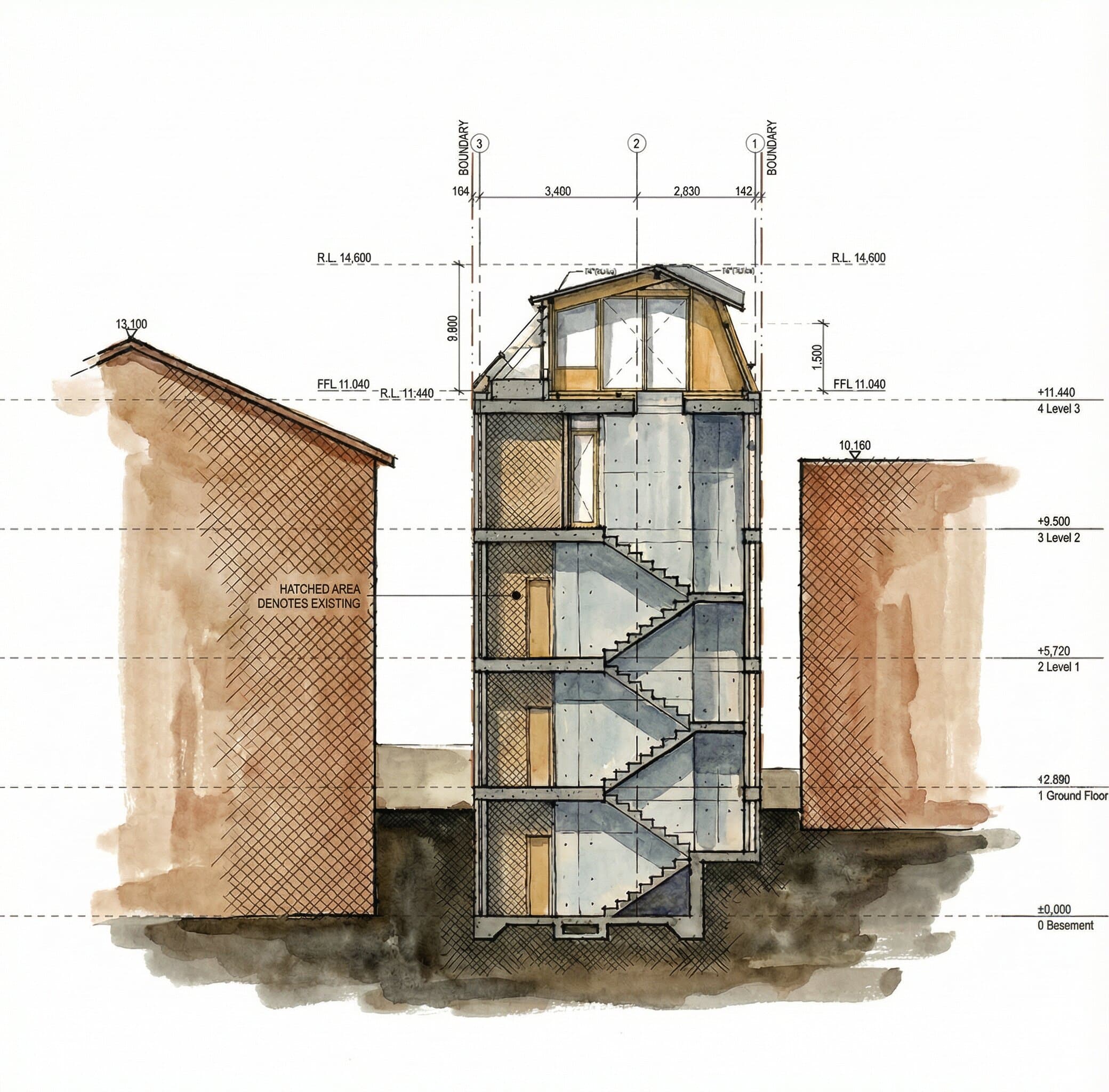
The existing structure is a concrete waffle pod slab with brick party walls carrying the load. Any addition had to work within the structural limits of what was already there while reading as a sympathetic response to the original Suters design.
Our Approach
Noel took on this project for a neighbour early in his career, an end-to-end experience from first sketch through to council approval that shaped how Yaxley Studio approaches every project today.
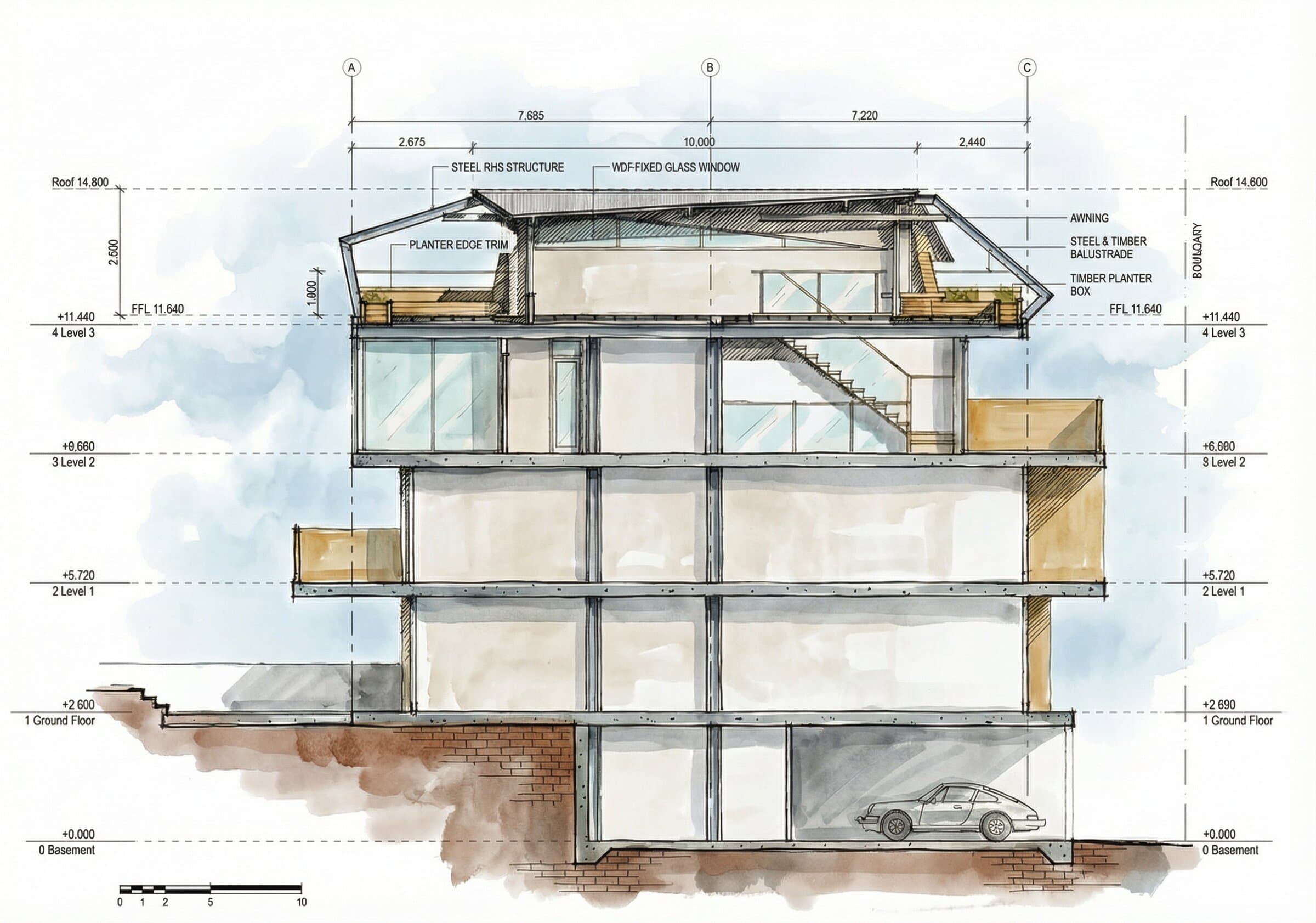
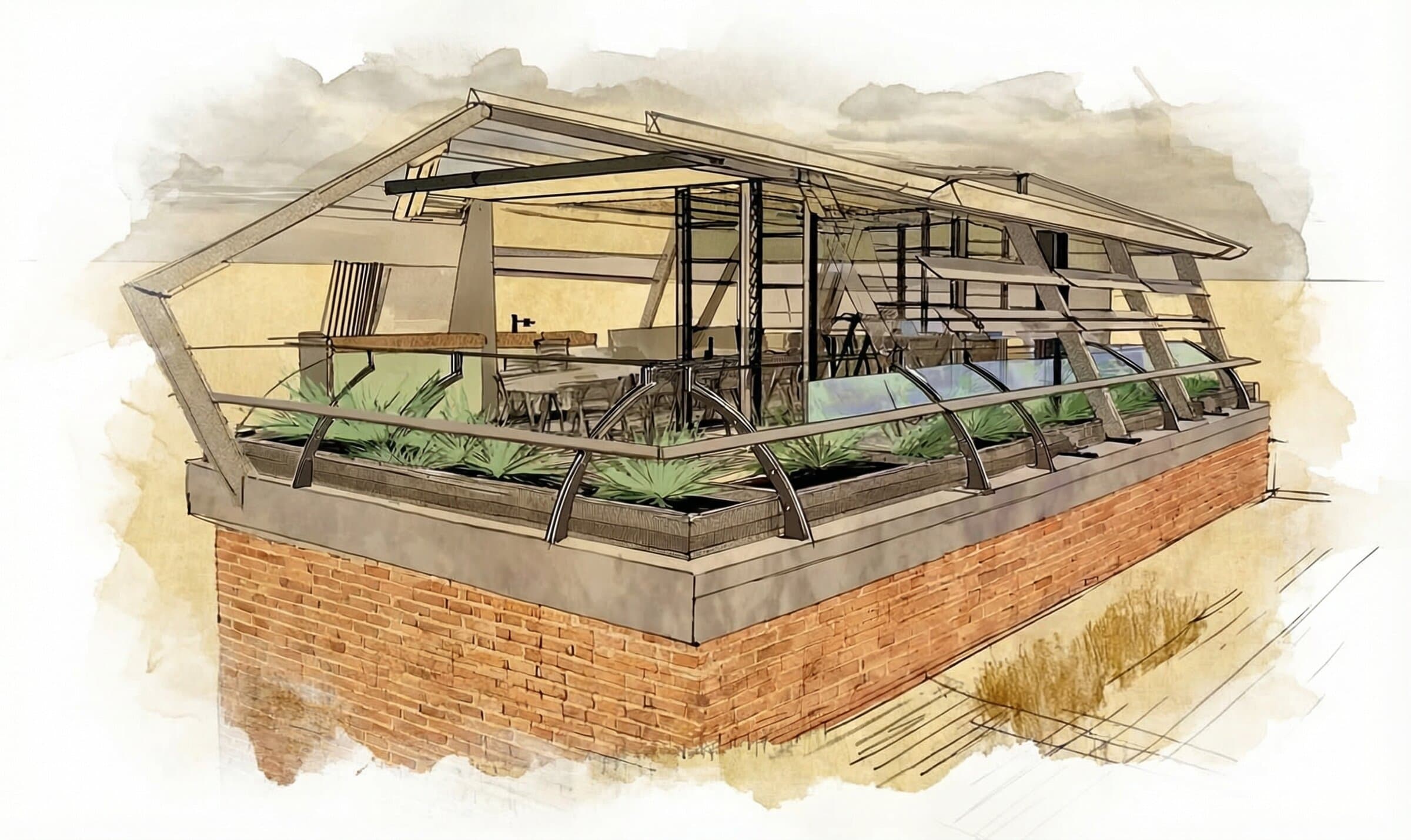
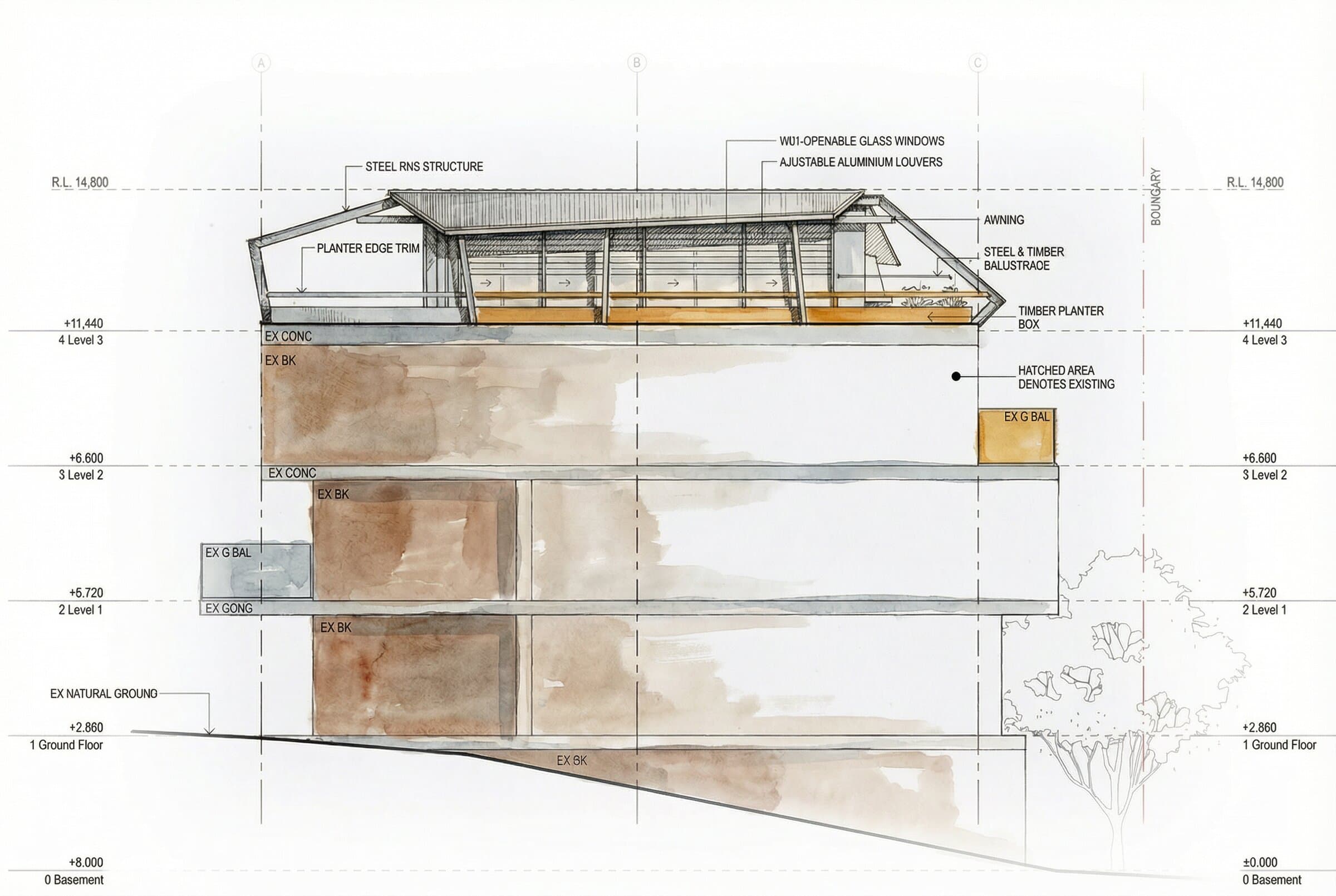
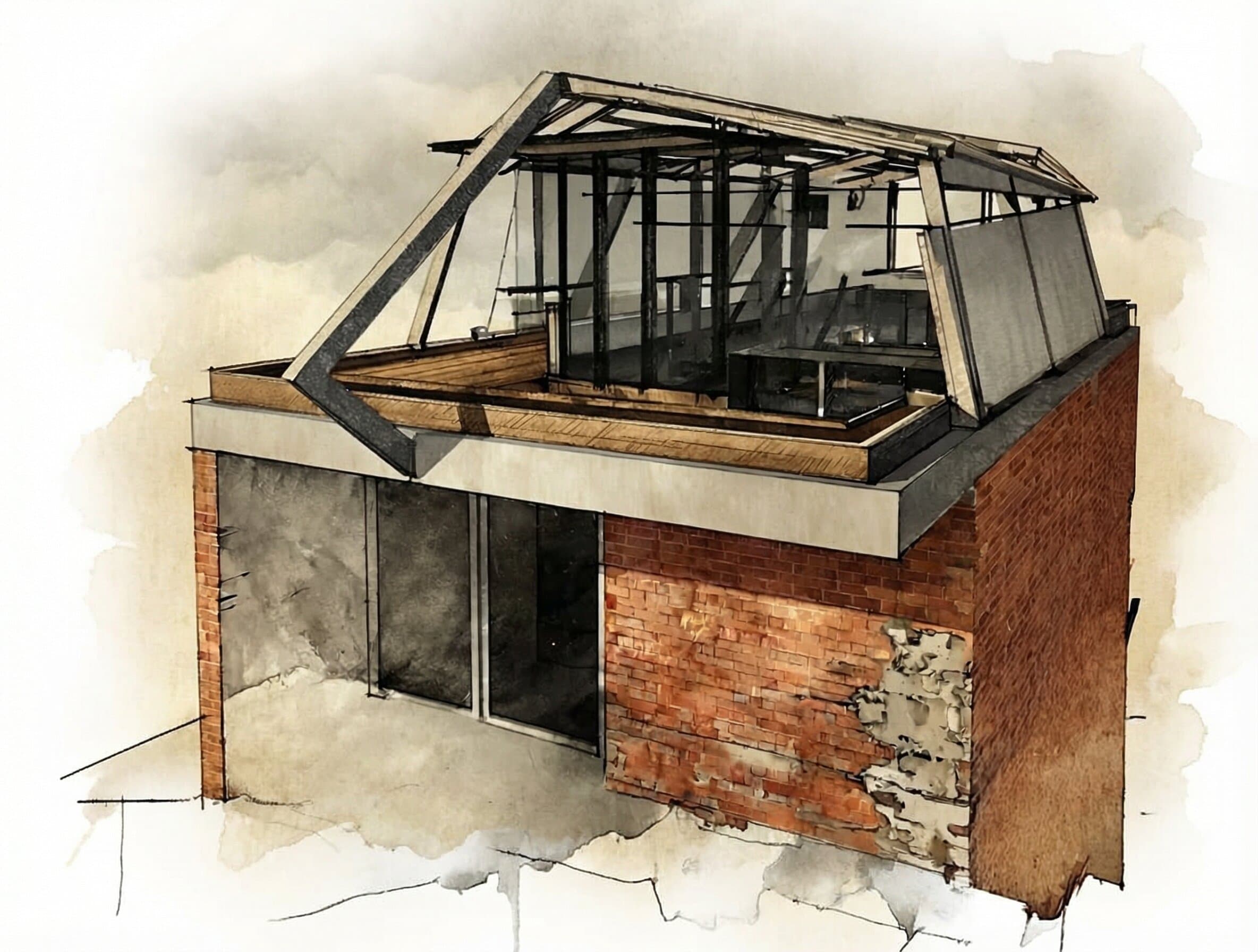
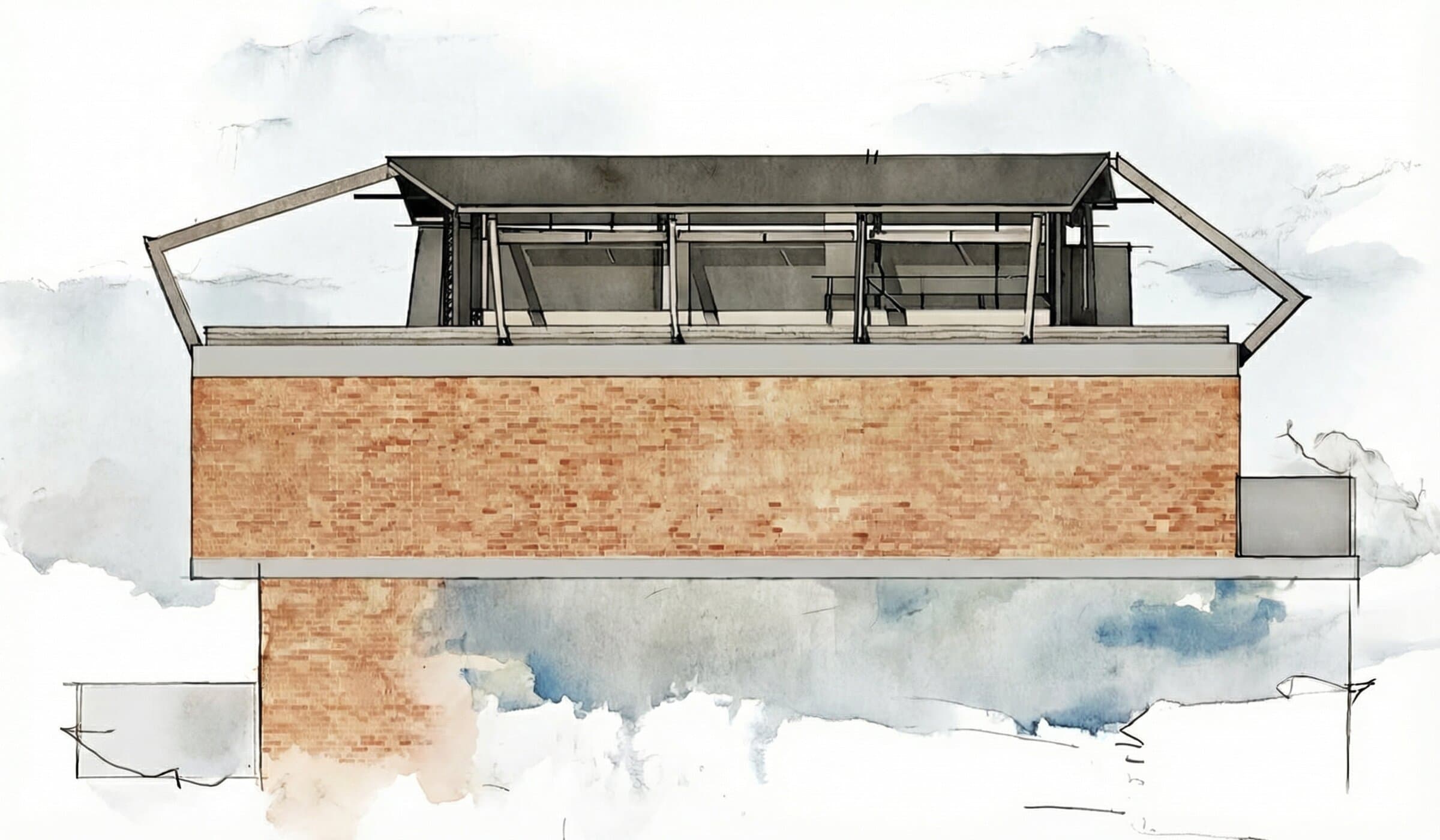
The first proposal attempted to maximise the roof space with a more boxy exoskeleton form. Council rejected it. Rather than fighting the decision, we went back to the drawing board. The revised scheme retained the exoskeleton format but transformed it into something far more sculptural: a composition of folding steel members that created a roof-like silhouette rather than a box sitting on top of the building. The folding geometry gave the extension a lightness that the original proposal lacked, and it read more convincingly as a roof element within the heritage streetscape.
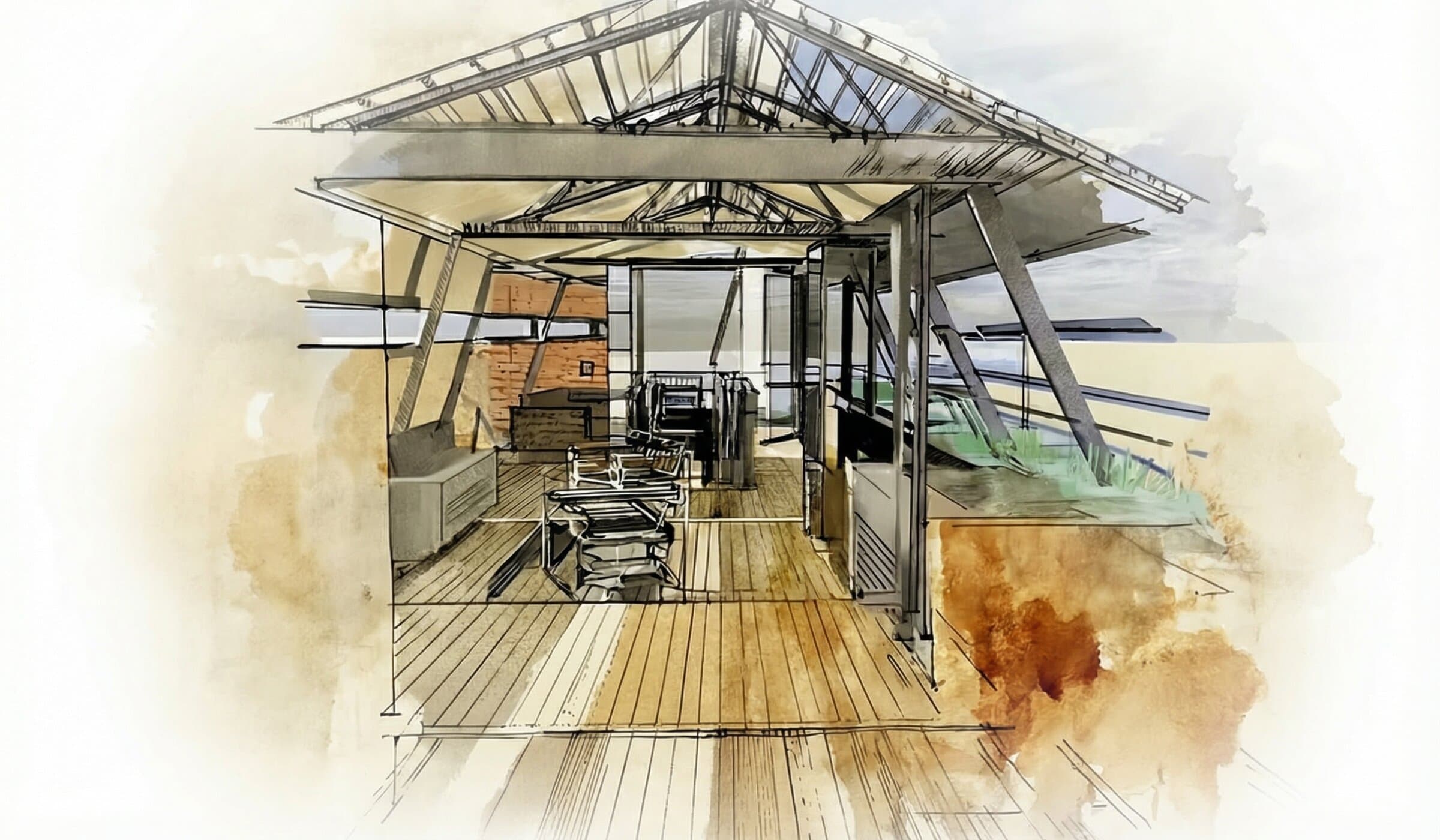
The design removed the existing skylights and used the void they created as the path for an integrated stairwell threading up through the building and into the new rooftop space. The extension itself was conceived as a steel thin structure with operable glass windows, adjustable aluminium louvres, and timber planter boxes, forming a transparent, lightweight pavilion that would sit above the solid brick mass of the existing building.
We led the design and prepared all planning documentation, driving the project through Newcastle City Council from lodgement to approval.
The Outcome
The revised scheme was approved by Council. The project was ultimately not built as our clients sold the house and relocated, but it remains a meaningful piece of work. When council rejected the first proposal, the design that came back was better than what we started with. The sculptural folding roof was a direct product of the constraint, an idea that would not have existed without the pushback.
That is the lesson this project carries forward into everything we do at Yaxley Studio. Council objections are not obstacles. They are design opportunities. The ability to listen, adapt quickly, and come back with something stronger is central to how we work.